




1/8 Aluminum Sheet vs 3/16 Aluminum Sheet: Key Differences
May 22 26
Aluminum sheets are a commonly used basic material in industries such as sheet metal processing, interior decoration, equipment manufacturing, and custom hardware. 1/8-inch and 3/16-inch are two frequently used standard thicknesses of aluminum sheets, but their parameters and performance differ significantly, and they are suitable for different scenarios, requiring precise differentiation when selecting materials.
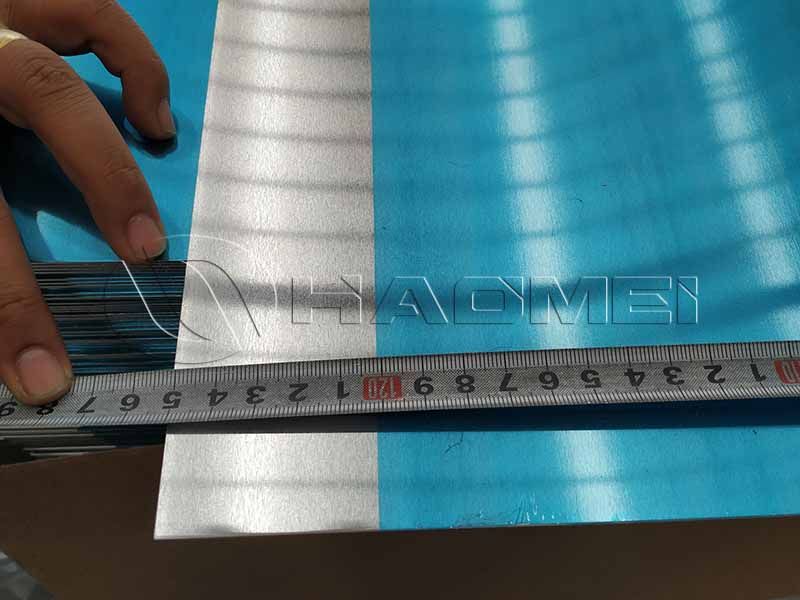
I. Size and Weight Differences
A 1/8 in aluminum sheet has a nominal thickness of 0.125 inches (3.175mm in metric conversion), classifying it as a lightweight, medium-thin aluminum sheet. A 3/16-inch aluminum sheet has a nominal thickness of 0.1875 inches (4.76mm in metric conversion), making it 50% thicker than the former, a significant difference.
The weight of an aluminum sheet is directly proportional to its thickness. For the same standard sheet size, a 3/16-inch aluminum sheet is heavier. The lightweight 1/8-inch aluminum sheet is convenient for handling, hoisting, and installation, without placing load pressure on equipment bases or mounting frames, making it suitable for various lightweight construction scenarios.
Thicker aluminum sheets, on the other hand, have a higher overall load-bearing capacity, slightly increasing transportation and installation costs, and also placing certain requirements on the load-bearing capacity of the supporting structure.
II. Strength and Structural Stability
1/8-inch aluminum sheets offer excellent toughness and plasticity, but their rigidity is relatively weak, limiting their resistance to deformation. In scenarios involving large spans, suspension, pressure, and impact, they are prone to bending, denting, and deformation, making them suitable only for static environments without heavy loads or high-frequency external forces, meeting the requirements for lightweight foundations.
3/16-inch aluminum sheets offer significantly improved structural strength, compressive and impact resistance, and stability far exceeding that of thinner sheets. They are suitable for complex scenarios such as medium-span suspended installations, outdoor wind pressure, daily heavy pressure, and minor impacts. The sheet surface is less prone to deformation, resulting in a longer service life, making them the preferred material for lightweight structural load-bearing applications.
III. Differences in Processing Performance
Both types of sheets can be cut, bent, drilled, welded, and drawn using conventional methods, but their processing adaptability differs significantly.
1/8-inch aluminum sheets offer high tolerance for errors, are easy to bend, and are less prone to cracking and hard creases. They are suitable for complex shapes such as curved bends, precision holes, and custom-made irregular shapes. Processing speed is fast, waste is low, and they offer high cost-effectiveness for small-batch, precision customization. The only drawback is that they are prone to overheating and deformation during welding and grinding.
3 16 aluminum sheets have higher rigidity, making them more difficult to process. Bending requires greater pressure, and improper processing can easily lead to cracking. Drilling and cutting are more time-consuming and result in higher tool wear. However, their advantages lie in their extremely high stability after processing.
They are less prone to springback after bending, and are less susceptible to deformation during welding and grinding. The finished product has better flatness and structural strength, making them suitable for processing regular, high-strength structural components.
IV. Applicable Scenarios
1/8-inch aluminum sheets are primarily used for lightweight and decorative applications, suitable for scenarios with no load-bearing requirements, including interior ceilings, wall decorations, home appliances and elevator interiors, advertising signs, lightweight chassis, small equipment covers, and custom-made sheet metal work.
3/16-inch aluminum sheets prioritize structural integrity, load-bearing capacity, and durability for outdoor applications. They are commonly used for equipment load-bearing base plates, vehicle modification panels, outdoor curtain wall mounting panels, workbench panels, mechanical structural components, and outdoor protective panels—conditions requiring long-term stability and no deformation.
V. Cost-Effectiveness
For the same material and size, 3/16-inch aluminum sheets require more material, have a higher unit price, and higher processing costs, resulting in an overall cost higher than 1/8-inch aluminum sheets. For purely decorative, lightly protective, and static applications without load, thinner sheets can effectively control costs and avoid waste.
For applications involving load-bearing, suspended structures, and outdoor stress, thicker aluminum sheets are necessary to avoid the hidden costs of later deformation repairs and replacements, resulting in higher long-term cost-effectiveness.
https://www.alsheetplate.com/a/18-aluminum-sheet-vs-316-aluminum-sheet-key-differences.html