




How to Choose Aluminum Sheet Metal Thickness
Feb 09 26
Both buyers and individual users place extremely strict requirements on aluminum sheet thickness. Many people wonder why thickness is the most critical requirement, given that the material and surface treatment of aluminum sheets also affect usability.
Unlike material and surface treatment, which can be corrected through later testing or adjustments, the thickness of an aluminum sheet, once determined, fixes its mechanical properties and application limits. Furthermore, the effects of thickness deviations are often irreversible. This is the core logic behind the strict thickness requirements, which can be summarized in three points:
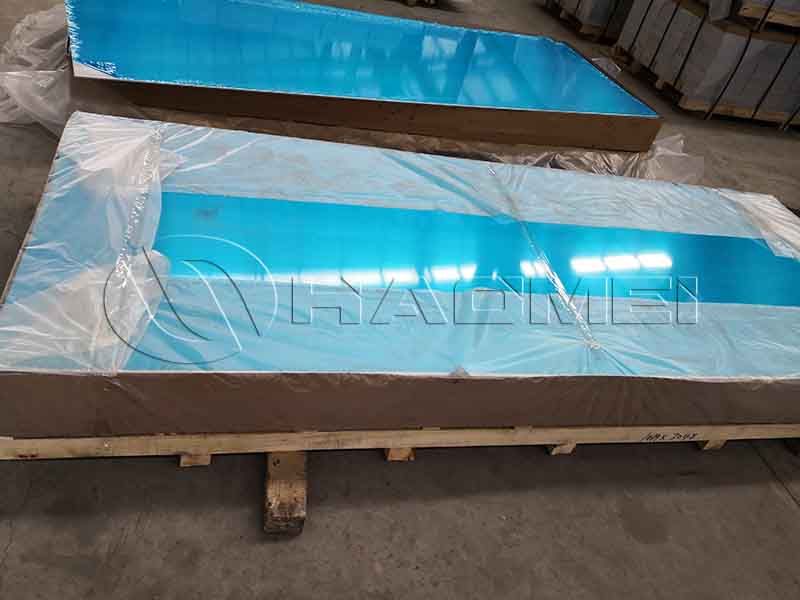
Firstly, thickness directly relates to safety. Especially in applications such as building curtain walls, ship decks, and machinery housings, aluminum sheets must bear loads, resist wind pressure, and withstand impacts. Insufficient thickness significantly reduces structural stability. Conversely, excessive thickness increases weight, placing additional load on the installation structure and posing safety risks.
Secondly, thickness determines the balance between cost and performance. The cost of aluminum sheets of the same material is positively correlated with thickness; thicker sheets often have a higher cost per unit weight than thinner sheets. Insufficient thickness, however, leads to substandard performance, requiring later repairs and replacements, resulting in more harm than good. Therefore, precise thickness control is essential to achieving the optimal balance between performance and cost.
Finally, thickness affects processing adaptability and the final effect. Processes such as bending, welding, and drilling of aluminum sheets have specific thickness requirements; for decorative aluminum sheets, uneven thickness can cause wavy deformation of the surface, severely affecting the flatness of the appearance.
Popular Thicknesses
Based on current industrial and civilian needs, the most popular aluminum sheet thicknesses on the market are 0.5mm, 1mm, 2mm, 3mm, 5mm, and 8mm. Among them, 5mm aluminum sheet has become one of the most popular thicknesses due to its advantages of "balanced performance, wide adaptability, and high cost-effectiveness," adapting to the mainstream needs of many industries.
Mainstream Popular Thicknesses and Applicable Scenarios
- 0.5mm-1mm: Primarily lightweight and low-cost, mostly used for heat sinks for electronic components, battery casings, small billboards, and aluminum foil substrates for packaging. Suitable for precision, small-scale applications where strength requirements are not high.
- 2mm-3mm: Core thickness for civilian and light industrial use, suitable for building ceilings, interior decorative panels, appliance casings, and automotive interior parts. Balancing aesthetics and basic performance, with ample stock and outstanding cost-effectiveness. - 5mm: The "all-purpose" thickness for medium-thick plates, and currently the most in-demand specification. This will be analyzed in detail below.
- 8mm: Primarily designed for medium to heavy-duty applications, often used for large machinery shells, ship interior panels, and heavy furniture frames. Performance is superior to 5mm, but cost and processing difficulty are correspondingly higher.
5mm Aluminum Plate: The Core Reasons for its Popularity
5mm aluminum plate is a core specification for medium-thick plates. It avoids the insufficient load-bearing capacity of thin plates while avoiding the high cost and processing difficulties of thick plates. Its popularity is mainly reflected in three points:
1. Balanced performance, suitable for multiple scenarios. The rigidity and toughness of 5mm aluminum plate are just right, possessing a certain load-bearing capacity and impact resistance. It can be used directly as a small structural component. Simultaneously, the processing difficulty is moderate, requiring no specialized large equipment. Bending, welding, and drilling processes can be easily achieved, balancing structural requirements with processing convenience.
2. Outstanding cost-effectiveness, controllable cost. Compared to 8mm and 10mm thick plates, 5mm aluminum plates consume less raw materials and have lower processing and transportation costs. Compared to 2mm and 3mm thin plates, they have stronger load-bearing capacity, longer service life, and require less frequent maintenance and replacement, resulting in a more cost-effective long-term use. Whether for industrial procurement or mass decoration, they achieve a balance between cost and performance.
3. Wide range of applications and strong demand. 5mm aluminum plates can cover many mainstream fields such as construction, industry, and furniture—for example, auxiliary load-bearing panels for building curtain walls, protective shells for machinery and equipment, load-bearing base materials for large outdoor billboards, tabletops in furniture, and pipe insulation packaging. Depending on the alloy composition, they can even be adapted to special environments such as humidity and corrosion, and market demand remains consistently high.
Key reminders for selecting aluminum plate thickness
1. Prioritize the application scenario: Choose 0.5mm-3mm for decorative applications, 5mm and above for structural load-bearing applications, and 20mm or thicker plates for heavy industrial applications as needed. Avoid using thick plates for thin applications or thin materials for thick applications.
2. Strictly control thickness tolerance and "sufficient thickness" standards: When purchasing, confirm that the actual measured thickness is not less than the nominal thickness, and that the thickness tolerance is controlled within the national standard range (for 1mm-6mm aluminum plates, the tolerance is recommended to be ≤±0.1mm). Also, pay attention to distinguishing between the base material thickness and the coating thickness to avoid being misled by vendors who try to "make up for the thickness with coatings." It is best to clearly specify the thickness standard in the contract. Haomei Aluminum can provide custom aluminum plate for you.
3. Consider alloy composition: The performance impact of thickness is based on the same alloy composition. For example, the base material strength of a 6061 series thick plate is still higher than that of a 1060 series thick plate. Performance cannot be judged solely based on thickness.
https://www.alsheetplate.com/a/how-to-choose-aluminum-sheet-metal-thickness.html