




Is An Aluminium Chequer Plate Same with An Aluminum Diamond Plate
Feb 03 26
Many people confuse the terms "aluminium chequer plate" and "aluminum diamond plate"—some say they are the same thing, just different names; others believe there are subtle differences and they cannot be used interchangeably. So what's the truth?
1. Aluminium chequer plate
The core definition of an aluminum chequer plate is "an aluminum alloy sheet with a raised texture on its surface." The pattern is not fixed but encompasses various geometric designs, such as checkered patterns, striped patterns (five stripes, double stripes), diamond patterns, and even custom patterns. Its core characteristic is that the raised texture is created on the aluminum sheet surface through rolling or stamping processes. Its core functions are to improve anti-slip performance, enhance structural strength, and also provide a certain degree of decoration.
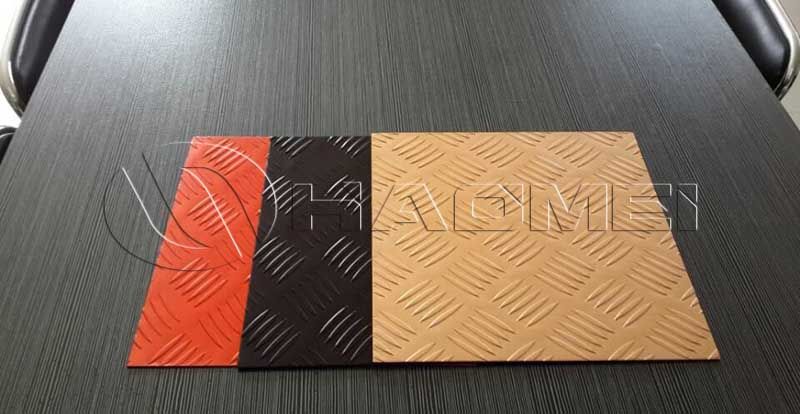
Simply put, "aluminium chequer plate" is a "general category." Any aluminum sheet with a raised anti-slip texture on its surface can be classified as this. In the industry, it is also often referred to as a "tread plate" or "floor plate."
2. Aluminum diamond plate
The definition of "aluminum diamond plate" is more specific—it refers specifically to aluminum alloy sheets with a standard diamond-shaped raised pattern on the surface. This diamond pattern is usually of regular size and has a clear outline, making it the most common and representative form of all patterned aluminum sheets.
Originally, "aluminum diamond plate" is a "subcategory" of "aluminum chequer plate," one of the latter's many pattern types. However, due to the versatility and widespread use of the diamond pattern, this specific term has gradually become widely used, even leading to situations where it is used to refer to a specific type but not a universal one.
Differences in Practical Applications
In actual engineering, procurement, and usage scenarios, "aluminum chequer plate" and "aluminum diamond plate" are often used interchangeably, especially in different English-speaking regions (e.g., "chequer plate" is commonly used in the UK, while "diamond plate" is more common in the US). However, strictly speaking, there are still subtle differences in their usage scenarios, mainly in terms of "precise matching of needs."
1. Fully interchangeable applications
Whether it's a chequer plate or a diamond plate, their core properties are completely identical: lightweight (lighter than steel, easier to transport and install), corrosion resistant (aluminum's natural oxide layer resists rust, suitable for outdoor/marine environments), anti-slip (raised patterns increase friction), and easy to process (can be cut, welded, and bent). Therefore, in most applications where the pattern shape is not critical, the two can be used interchangeably, such as:
- Flooring in industrial workshops and warehouses;
- Protective linings for truck beds and trailer floors;
- Anti-slip panels for stair treads, ramps, and walkways;
- Ordinary decorative wall surfaces and equipment protective enclosures.
In these applications, buyers and suppliers don't strictly distinguish between terminology; as long as the core requirement of "anti-slip patterned aluminum plate" is clear, it's sufficient. Many suppliers even list both as synonyms in their product catalogs.
2. Scenarios requiring precise differentiation
The differences between the two only become apparent when there are specific requirements regarding pattern shape, surface treatment, or application scenario:
- When pattern shape requirements are strict: If the project explicitly requires a "non-diamond pattern" (such as stripes or checks), the term "aluminum chequer plate" must be used to avoid suppliers misunderstanding it as a standard diamond plate; if a "diamond pattern" is explicitly specified, "aluminum diamond plate" is more precise.
- When surface treatment preferences differ: Aluminum diamond plates are more often polished, presenting a mirror-like reflective effect, suitable for highly decorative scenarios (such as high-end store walls and display panel panels); while general-purpose patterned aluminum plates (chequer plates) are mostly anodized or painted, emphasizing industrial practicality, with a rougher and more durable surface texture.
- Differences in industry practices: In some high-end marine engineering projects (such as ship decks and dock platforms), "chequer plates" focus more on industrial-grade anti-slip performance and often use corrosion-resistant alloys such as 5052 and 5754; "diamond plates" may be used for ship interior decoration and pay more attention to the neatness of the appearance.