




Aluminium Chequer Plate
Jun 25 26
Specify Aluminium Chequer Plate Around Slip Resistance
Aluminium Chequer Plate is selected because raised patterns improve foot grip while keeping weight low. The main purchasing risk is not the alloy name; it is whether the delivered surface gives reliable traction after cutting, fabrication, wet service, and cleaning.
Aluminum has a density of about 2.70 g/cm³, roughly one-third that of carbon steel. That makes patterned plate attractive for vehicle floors, access platforms, stairs, dock plates, toolboxes, wall protection, and industrial walkways where corrosion resistance and easier handling matter.
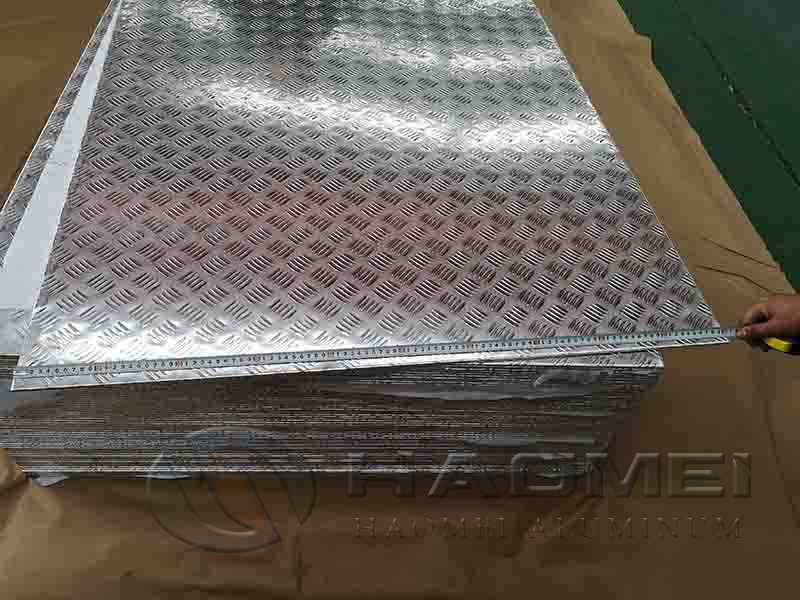
Do not treat all tread plates as interchangeable. Pattern height, base thickness, temper, alloy, and surface finish change load capacity, formability, appearance, and slip behavior.
Material Selection, Patterns, and Processing
For indoor flooring, decorative panels, and light-duty truck trim, 3003 is common because it offers good corrosion resistance, formability, and moderate strength. When procurement teams need stable supply and easier fabrication, Alloy 3003 Aluminum Sheet is often used as the starting material for patterned production.
For wet, marine, trailer, or outdoor applications, 5754 is frequently chosen because the magnesium-bearing 5xxx alloy family provides stronger corrosion resistance than commercial-purity grades. Where road salt, washdown, or coastal exposure is expected, 5754 Aluminum Alloy Sheet is a practical reference grade for tread plate sourcing.
| Alloy | Typical use | Strength level | Corrosion resistance | Fabrication note |
|---|---|---|---|---|
| 1060 / 1100 | Decorative panels, light covers | Low | Good | Very formable, not for heavy traffic |
| 3003 | Vehicle trim, stairs, general flooring | Medium-low | Good | Good balance of price and workability |
| 5052 | Toolboxes, marine panels, truck parts | Medium | Very good | Better fatigue and corrosion resistance |
| 5754 | Walkways, trailers, outdoor platforms | Medium | Very good | Preferred where wet service is common |
| 6061 | Structural parts, machined components | Higher | Good | Less common for embossed tread due to formability limits |
Common patterns include 5-bar, diamond, 2-bar, 3-bar, and small lentil designs. The 5-bar pattern is widely used in industrial flooring because it offers multi-directional grip and is easy to clean. Diamond plate is popular in North America for toolboxes, kick plates, and trailer decks.
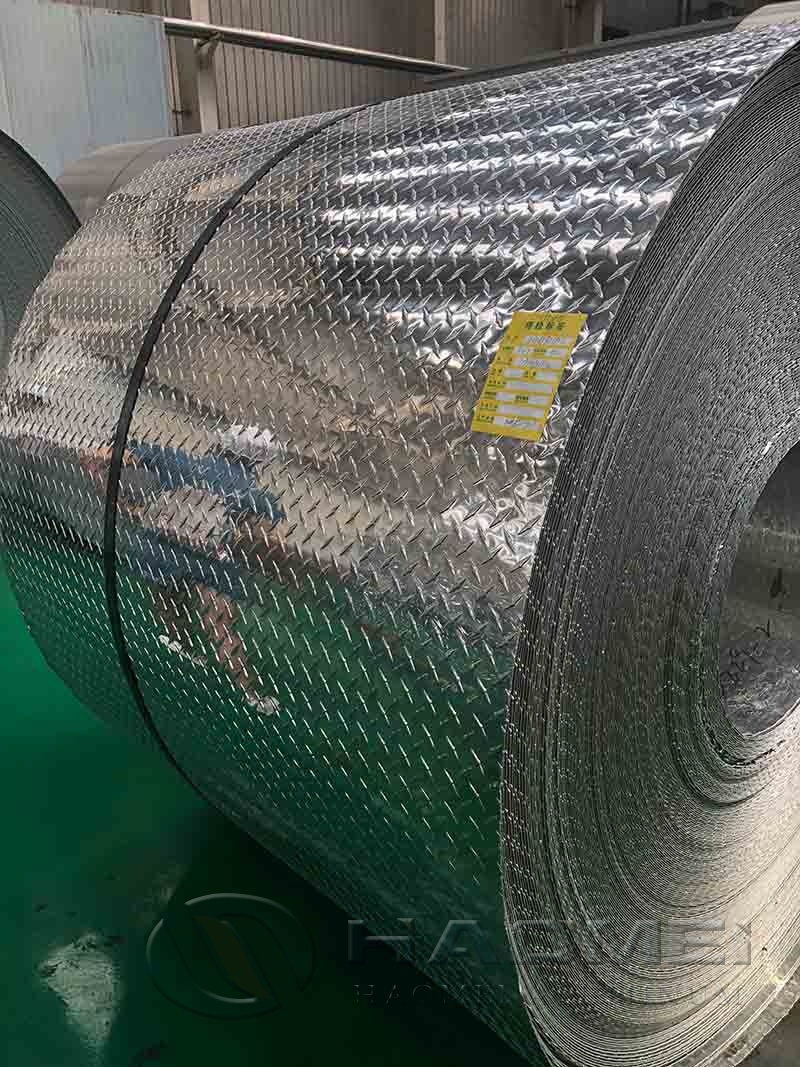
Production usually follows these steps:
- Cast slab or continuous cast feedstock is homogenized where required.
- Hot rolling reduces thickness and improves structure.
- Cold rolling reaches the ordered base gauge.
- Embossing rolls press the raised pattern into the surface.
- Leveling controls flatness after patterning.
- Cutting, shearing, or slitting prepares ordered dimensions.
- Surface protection, inspection, bundling, and palletizing prepare export shipment.
Always confirm whether the quoted thickness means base thickness only or total thickness including raised pattern. In many commercial quotations, nominal thickness refers to the base metal, while tread height is additional. This affects weight, structural calculation, and freight cost.
Standards, Costs, and Supply Controls
Relevant standards should be written into the purchase specification, not left to verbal agreement. EN 1386 covers aluminum and aluminum alloy tread plate specifications in Europe. ASTM B632/B632M covers aluminum-alloy rolled tread plate in ASTM markets. ASTM B209/B209M is widely used for aluminum and aluminum-alloy flat rolled products. EN 573 covers chemical composition, EN 515 covers temper designations, and EN 485 covers tolerances and mechanical requirements for flat rolled aluminum products.
Slip resistance is application-specific. A raised pattern does not automatically satisfy workplace safety rules. If the plate will be used on stairs, ramps, loading bays, or wet walking surfaces, request test evidence under a recognized method such as DIN 51130, EN 16165, or pendulum testing under EN 13036-4 where applicable. Local building codes and occupational safety rules may require separate assessment after installation.
| Item to confirm | Why it matters | Acceptable document |
|---|---|---|
| Alloy and temper | Controls strength, corrosion resistance, bending | Mill test certificate to EN 10204 3.1 if required |
| Base thickness | Determines weight and load capacity | Dimensional inspection report |
| Pattern type and height | Influences grip and cleanability | Drawing, sample, or approved photo |
| Flatness and width tolerance | Prevents installation gaps and rocking | EN 1386, ASTM B632/B632M, or agreed tolerance table |
| Surface finish | Affects appearance and paint adhesion | Visual standard and sample approval |
| Slip test | Reduces liability on walkways | Third-party or internal test report |
| Packaging | Prevents water stain and transit abrasion | Packing specification with moisture control |
Cost is normally built from four components: aluminum price, regional premium, conversion charge, and logistics. Aluminum price is commonly referenced to LME official prices. The regional premium reflects physical metal availability, duty, freight, and local market tightness. Conversion charge covers rolling, embossing, leveling, cutting, quality inspection, and packaging.
A practical RFQ formula is:
| Cost component | What to ask for |
|---|---|
| Metal basis | LME average period, quotation date, or fixed price validity |
| Premium | Region and delivery term, such as CIF, CFR, FOB, or DDP |
| Conversion | Alloy, temper, pattern, width, thickness, and quantity band |
| Surface protection | Interleaving paper, PVC film, oiling, or dry finish |
| Packaging | Wooden pallet, seaworthy crate, bundle weight, fumigation status |
| Risk items | Currency, duty, anti-dumping measures, insurance, demurrage |
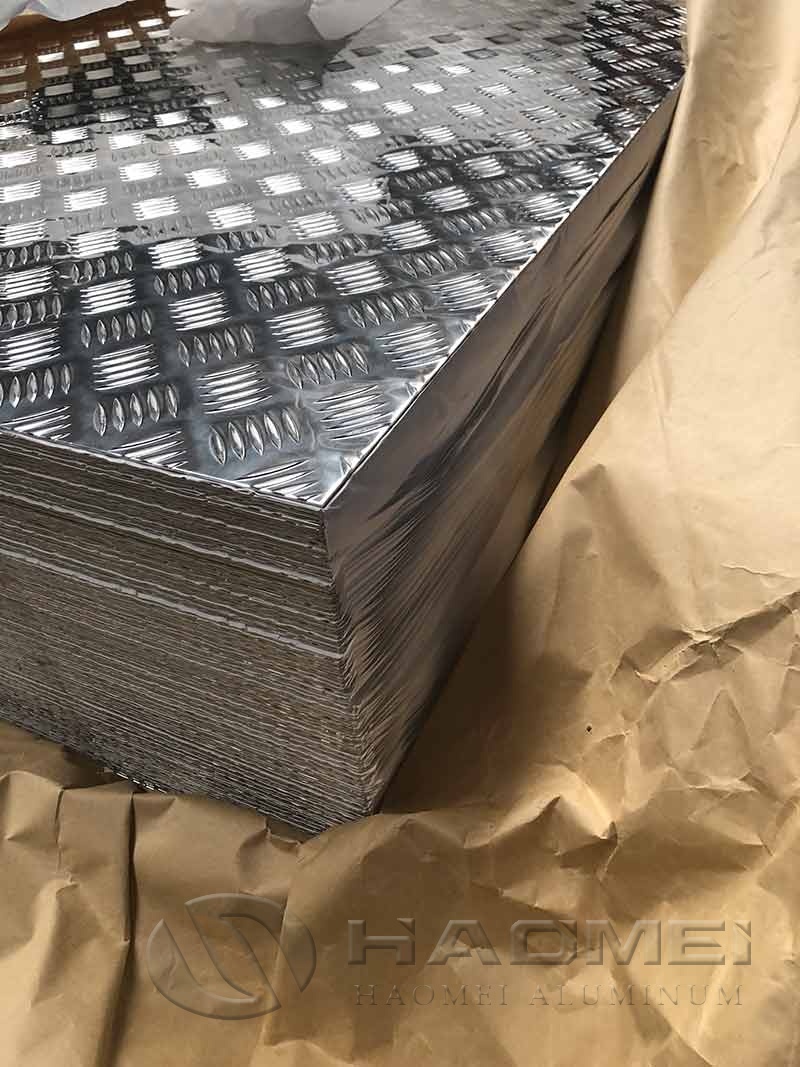
Market cycles can move quickly. Aluminum is energy-intensive; primary smelting cost is strongly affected by electricity, alumina, carbon anodes, and freight. Supply can tighten when European power prices rise, when Chinese winter production controls reduce output, or when Red Sea, Panama Canal, or port congestion increases transit cost. Demand is usually linked to transport, construction, marine equipment, cold-chain logistics, and industrial maintenance.
Compliance also affects landed cost. The EU Carbon Border Adjustment Mechanism, Regulation (EU) 2023/956, entered a transitional reporting phase from 2023 and is scheduled to move toward financial obligations from 2026. Aluminum products may require embedded-emissions data depending on customs classification and scope. In the United States, Section 232 measures have applied a 10% tariff to many aluminum imports since 2018, with country-specific arrangements and exclusions changing over time. Always verify HS code, origin, and trade remedy status before contracting.
Use this order checklist before releasing a large-volume PO:
- Define service condition: dry indoor, wet indoor, outdoor, marine, chemical, or food-area exposure.
- Select alloy by corrosion requirement, not only by price.
- State base thickness, width, length, and tolerance standard.
- Specify pattern name, pattern direction, and acceptable visual reference.
- Require temper, mechanical properties, and certificate format.
- Confirm slip test requirement if people will walk on the surface.
- Agree weight tolerance and theoretical weight calculation method.
- Confirm PVC film, paper interleaving, oil level, and pallet moisture control.
- Fix Incoterms, price validity, payment terms, and shipment window.
- Check duty, sanctions, CBAM, Section 232, and local import documentation before production.
For projects where slip resistance is the priority, approve a physical sample from the intended production route before mass production. Test it in the same direction of walking, with the same cleaning method, and under the same wet or oily conditions expected in service.