




How to Get Black and Blue Anodized Aluminum Sheet
Dec 19 25
In many fields such as architectural decoration, electronic casings, and home furnishings, black and blue anodized aluminum sheets are highly favored materials due to their stable texture and corrosion and wear resistance.
The effect of anodizing largely depends on the alloy composition of the aluminum sheet itself. Simply put, aluminum sheets with fewer impurities and a more uniform composition are easier to dye into pure, even black and blue.
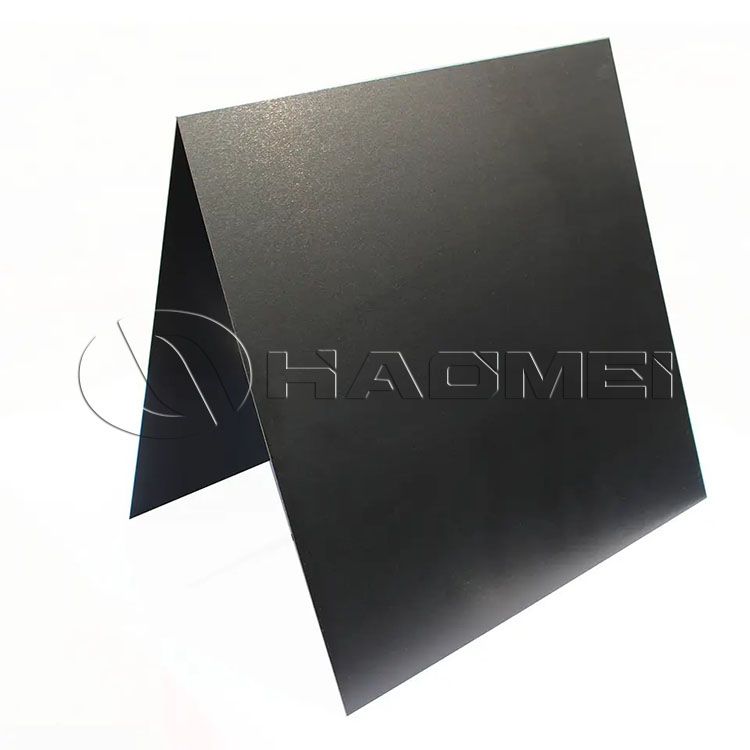
Aluminum Alloy Selection
1. Pure aluminum sheets
Pure aluminum sheets are mainly composed of aluminum with extremely low impurity content, providing a "clean canvas" for dyeing. During anodizing, its oxide film is uniform and dense, with a strong ability to absorb dye, easily producing rich black and pure blue, with a consistent surface color and almost no color difference.
At the same time, pure aluminum sheets are relatively affordable, suitable for cost-sensitive applications that prioritize color uniformity, such as home decorative panels and ordinary electronic component casings.
2. Aluminum-magnesium alloy sheets
Aluminum-magnesium alloy sheets incorporate magnesium into aluminum, resulting in significantly higher strength than pure aluminum sheets while retaining good plasticity and corrosion resistance. Its surface finish is also excellent, with strong oxide film adhesion.
After dyeing, the black anodized aluminum sheet is deep and the blue is bright, and it remains stable even in humid and friction-prone environments, not easily fading or peeling. This type of alloy sheet is particularly suitable for scenarios that require a balance between strength and appearance, such as outdoor decoration, marine fittings, and high-end luggage hardware.
3. Avoidance Tips
Aluminum alloy sheets containing more impurities, such as aluminum-silicon alloys (4000 series) and aluminum-copper alloys (2000 series), are not suitable for black or blue anodizing. Elements such as silicon and copper can cause uneven oxide films, resulting in "mottling," inconsistent color depth after dyeing, or even failure to dye at all; moreover, the corrosion resistance of the oxide film will be reduced, and fading and peeling may occur after a short period of use, making it extremely cost-effective.
Core Process
1. Pre-treatment
The purpose of this step is to remove oil, oxide scale, and impurities from the surface of the aluminum sheet, exposing a fresh and clean surface.
Firstly, clean the aluminum plate with an alkaline solution (such as sodium hydroxide solution) to remove surface oil and oxide layer; then neutralize with an acidic solution (such as nitric acid solution) to eliminate residual alkaline substances; finally, rinse thoroughly with clean water to prevent residual chemicals from affecting the subsequent oxidation reaction.
This step must be thorough; otherwise, imperfections will appear in the oxide film, resulting in noticeable spots after dyeing.
2. Anodizing
The pre-treated aluminum plate is used as the "anode" and placed in a sulfuric acid solution, with direct current applied. A chemical reaction occurs on the aluminum plate surface, generating a porous alumina film—this film acts as the "carrier for adsorbing dye."
The thickness and pore size of the film are crucial, generally controlled between 10-20 micrometers. Uniform pores allow for sufficient dye penetration. This process is like "building a house" for the aluminum plate; the pores are the "rooms," preparing for subsequent dyeing.
3. Dyeing
This is the core step that determines the final color of the aluminum plate. Anodized aluminum plates are immersed in a specialized black or blue organic dye solution, with careful temperature control (generally 50-60℃) and immersion time (ranging from a few minutes to over ten minutes).
The pores of the alumina film on the aluminum plate surface act like a "sponge," actively adsorbing dye molecules; the longer the immersion time, the deeper the color. To achieve a standard black or blue, strict control of dyeing parameters is necessary to avoid colors that are too light or too dark. For special hues, such as deep black or navy blue, the immersion time can be appropriately extended.
4. Sealing
After dyeing, the dye within the pores of the alumina film is not yet stable and is easily washed away by rain or friction. Sealing involves "blocking" these pores, locking the dye firmly inside. A common method is to immerse the aluminum plate in boiling water or a nickel salt solution.
The high temperature causes the pores of the alumina film to shrink and close, thus encapsulating the dye within the film. After sealing, the surface of the aluminum plate becomes smooth, the color is more stable, and its corrosion and wear resistance is greatly improved; it will not fade even after several years of normal use.
https://www.alsheetplate.com/a/how-to-get-black-and-blue-anodized-aluminum-sheet.html