




Embossed Aluminum Mirror Sheet for Lighting Reflectors
Jun 17 26
For the LED commercial lighting, outdoor engineering lighting, supermarket and industrial & mining lighting, reflectors serve as core components for light control, efficiency improvement and glare prevention of luminaires. Material selection directly determines the overall luminous efficiency, eye comfort and service life of luminaires.
Compared with traditional stainless steel reflector plates, plastic coated reflective parts and ordinary flat mirror aluminum, the embossed aluminum mirror sheet has four core advantages including ultra-high base mirror reflectivity, controllable diffused light effect, structural rigidity and heat dissipation performance, and have become the mainstream material for mid-to-high-end lighting reflectors.
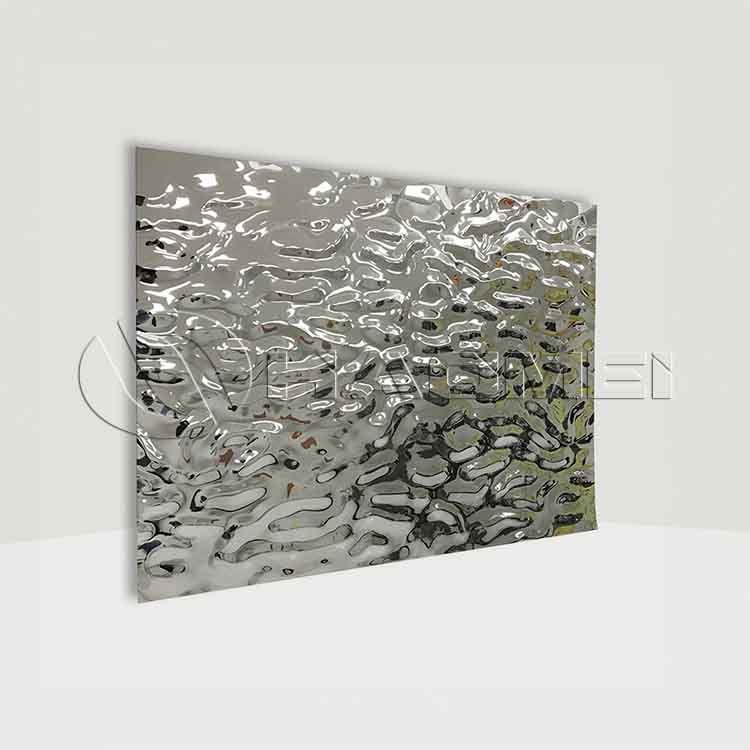
Reasons for Adopting Embossed Mirror Aluminum Sheets
Conventional flat pure mirror aluminum sheets feature extremely concentrated light reflection, which easily causes strong glare and uneven light spots due to direct light emission, limiting their applicable scenarios. Ordinary frosted aluminum sheets have low reflectivity, leading to high energy consumption and insufficient illuminance of luminaires.
Made of high-purity mirror aluminum as the base material, embossed mirror aluminum sheets are processed with precision single-sided roller embossing to form concave-convex textures. They retain the high mirror reflectivity of the base material, while scattering direct light via textures to achieve a dual balance of high luminous efficiency and softened light spots. They are applicable to reflectors for full-category luminaires including downlights, spotlights, industrial & mining lamps, plant grow lights, street lights and panel lights.
Core Advantages Over Traditional Materials
Lightweight Property: Its weight is only one-third of that of stainless steel reflector plates, which reduces the bearing load of luminaire housings and adapts to the structural design of ultra-thin luminaires.
Weather Resistance and Oxidation Resistance: With an anodized mirror surface layer, it resists thermal aging caused by light heat and indoor & outdoor water vapor corrosion, with a service life of 8 to 10 years.
Easy Bending and Processing: It features high plasticity, enabling integrated stamping of special-shaped lamp cups and arc-shaped reflective grooves, and supporting customized non-standard reflectors.
Enhanced Heat Dissipation: The concave-convex embossed structure expands the heat dissipation area, quickly dissipates heat generated by light sources and delays luminous decay.
Classification and Mandatory Requirements for Base Mirror Reflectivity
The maximum reflectivity of polished aluminium sheets is completely determined by the original mirror reflectivity of the base material. Embossing only changes the light scattering angle and cannot improve the basic reflectance value, which is a key pitfall in luminaire material selection. Based on visible light band (380-780nm) reflectance values, the industry divides three lighting-specific grades adapted to different operating conditions of luminaires:
1. Basic Engineering Grade: Mirror Reflectivity 80%-85%
Mostly made of 1060 mirror aluminum, this grade applies to luminaires with low luminous efficiency requirements, such as ordinary industrial & mining lamps for workshops, public corridor lighting and simple outdoor floodlights. It features low processing cost and high fault tolerance, merely meeting basic light-gathering and reflection demands. Embossing improves light utilization rate by 10%-15%, and it is not recommended for refined commercial lighting scenarios.
2. Commercial Standard Grade: Mirror Reflectivity 86%-90%
As the mainstream best-selling material, it is preferably made of 1070 high-purity aluminum base material with total impurity content lower than 0.3%, treated by chemical brightening and anodic pore sealing. It is suitable for supermarket spotlights, hotel downlights, office panel lights and eye-protective classroom lamps. This reflectivity range balances energy consumption and luminous efficiency; under LED light sources with the same power, the overall illuminance of luminaires increases by about 20%. It is the most widely used specification for commercial reflectors and the general qualified standard in the industry.
3. High-end Optical Grade: Mirror Reflectivity 92%-95%
Adopting ultra-mirror high-purity 1085 aluminum base material with double-sided precision mirror grinding technology, this grade delivers ultra-high visible light reflectivity. It applies to reflectors for plant grow lights, museum showcase spotlights, stage lights, high-end track spotlights and solar lighting equipment. The base material is required to be free of grinding marks, orange peel defects and oxidation white spots, with single-point reflection uniformity error ≤1%. It maximizes light convergence and eliminates light energy loss. Some energy-saving luminaires can directly reduce power consumption by 5-8W by adopting this high-reflection material.
Embossing Process and Texture Requirements
1. Basic Threshold Requirements for General Embossing Process
Embossing Depth: Uniformly controlled at 0.15-0.3mm. Excessively deep embossing will damage the mirror surface layer and reduce original reflectivity; excessively shallow embossing fails to achieve light scattering and anti-glare effects.
Surface Integrity: The mirror bright surface after embossing shall have no edge chipping, dark spots or embossing scratches, with smooth texture edges to avoid stray light from diffuse reflection.
Flatness: Uniform embossing stress on the whole sheet; no texture cracking or bright layer peeling on the mirror surface during bending for special-shaped lamp cup fabrication.
2. Applicable Scenarios of Mainstream Textures
Hammered Texture: A universal optical texture in the industry with micro concave-convex arc patterns. It retains over 75% directional reflection capacity and softly disperses strong light, controlling the UGR glare value below 16. It matches base materials with 86%-90% mid-range reflectivity, suitable for eye-protective classroom lamps, household downlights and supermarket floodlights.
Bead Texture/Fine Diamond Texture: Featuring stronger light scattering capacity and multi-angle diffuse reflection without direct light spots. It adapts to large-area panel lights and ceiling soft lighting, matching base materials with 80%-85% basic reflectivity, focusing on uniform light output rather than light gathering.
Directional Long Strip Embossed Texture: A linear light-control texture that limits unidirectional light reflection. It is applied to linear wall washers and street light reflective grooves. Matched with base materials with mirror reflectivity above 92%, it realizes precise light control and prevents light overflow and light pollution.
Ultra-fine Matte Mirror Texture: A high-end customized texture that barely impairs mirror reflectivity, with fingerprint-resistant and easy-to-clean properties. It is suitable for reflectors for clean lighting in museums and medical aesthetic operating rooms.
https://www.alsheetplate.com/a/embossed-aluminum-mirror-sheet-for-lighting-reflectors.html