




What Is The Most Popular 1000 series Aluminum
Nov 21 25
Within the aluminum alloy family, 1000 series aluminum, with its high purity, excellent electrical and thermal conductivity, and good processing properties, has become a fundamental material in packaging, electronics, construction, and other fields. Among the many 1000 aluminum alloys, 1060 aluminum alloy, with its balanced comprehensive performance, firmly occupies a mainstream position in the global market.
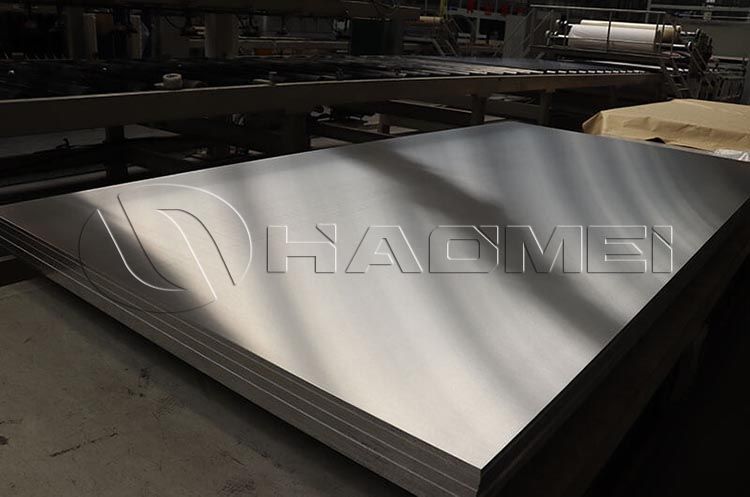
The Golden Balance of Purity and Performance
The core value of 1-series aluminum alloys stems from their purity, and the purity index of 1060 aluminum alloy perfectly meets the core requirements of most industrial applications. According to international standards, the aluminum content of 1060 aluminum alloy is ≥99.6%, only slightly lower than the high-purity 1070 (aluminum content ≥99.7%), but far higher than the commonly used 1100 aluminum alloy (aluminum content ≥99.0%). This high purity gives it two core advantages:
Firstly, it has electrical and thermal conductivity close to that of pure aluminum. Its conductivity can reach 60% IACS, although not as high as copper, but its conductivity per unit weight is better, making it a common material for power equipment such as transformer winding and bus bars, effectively achieving lightweight of power facilities. In the electronics field, heat sinks made of 1060 aluminum alloy can quickly dissipate the core heat of LED lights and computer CPU, ensuring the stable operation of electronic products.
On the other hand, it has excellent plasticity and machinability. In the annealed state, 1060 aluminum alloy has an elongation of up to 30%, far exceeding the 25% of 1100 aluminum alloy. Whether rolled, stamped, or bent, it can be easily formed without cracking.
This characteristic gives it an irreplaceable advantage in scenarios requiring deep processing, such as food packaging aluminum foil and architectural decorative panels—it can be rolled into ultra-thin aluminum foil of 0.01 mm and processed into decorative parts with complex curved surfaces.
Global Adaptability of Cost and Production Capacity
The widespread use of industrial materials relies on both cost and production capacity, and 1060 aluminum alloy excels in both aspects. Compared to high-purity grades such as 1070, 1060 aluminum alloy has slightly lower requirements for raw material purity, making impurity control during production easier and eliminating the need for additional purification process costs, thus keeping its price within a reasonable range.
More importantly, the manufacturing process of 1060 aluminum alloy has been standardized globally. Whether it's the Chinese GB/T standard, the American ASTM standard, or the Japanese JIS standard, all clearly define the composition and mechanical properties of 1060 aluminum alloy, forming globally accepted technical specifications. This standardization has led to rapid growth in production capacity.
Application Advantages Covering All Scenarios
Performance and cost advantages have laid the foundation for the widespread adoption of 1060 aluminum alloy, while its broad application adaptability is the key factor in its market dominance. From everyday food cans and aluminum foil tray to corrosion-resistant pipes in industry and curtain wall panels in architecture, 1060 aluminum alloy has a wide range of applications, thanks to its precise matching to the needs of different scenarios:
In the packaging industry, its high purity meets food contact safety standards, and its strong barrier properties help keep food fresh, making it a preferred material for food and pharmaceutical packaging.
In the chemical industry, its stable chemical properties allow it to withstand weak corrosive media such as concentrated nitric acid and acetic acid, making it widely used in small and medium-sized storage tanks and pipelines.
In the construction industry, its good atmospheric corrosion resistance and ease of coloring allow it to be processed into decorative materials of various colors to meet the needs of different architectural designs.
Compared to its counterparts 1050 and 1100 aluminum alloys, 1060 aluminum alloy has more obvious comprehensive advantages: its strength is slightly higher than that of 1050 aluminium sheet, which can meet the needs of light structural support; its plasticity is better than that of 1100 aluminum alloy, which can adapt to complex processing scenarios.
This intermediate characteristic allows it to cover some application areas of 1050 and 1100 aluminum alloys, while filling the demand gap between the two. Industry data shows that the yield rate of 1060 aluminum alloy in precision machining and complex forming scenarios is about 8% and 12% higher than that of 1050 and 1100 aluminum alloys, respectively.
https://www.alsheetplate.com/a/what-is-the-most-popular-1000-series-aluminum.html