




3105-H14 and 3105-H24 Aluminum Plate Applications
Jul 08 26
3105 aluminum plate is a non-heat-treatable aluminum-manganese alloy; differences in strength and hardness arise from the controlled combination of strain hardening and recovery annealing (tempering). This is the core meaning behind the "H" prefix temper designations:
- H14 Temper: Strain-hardened only; no subsequent tempering or annealing. After cold rolling to the target hardness, the material is finished directly. Strength is enhanced solely through rolling deformation, leaving internal grains in a high-stress, hardened state without undergoing microstructural recovery.
- H24 Temper: Strain-hardened plus incomplete tempering (partial annealing). The material is first cold-rolled to a hardening level exceeding that of H14, then subjected to low-temperature recovery tempering. This process releases some internal stress, reduces hardness, and improves ductility, creating a balance between hardness and plasticity.
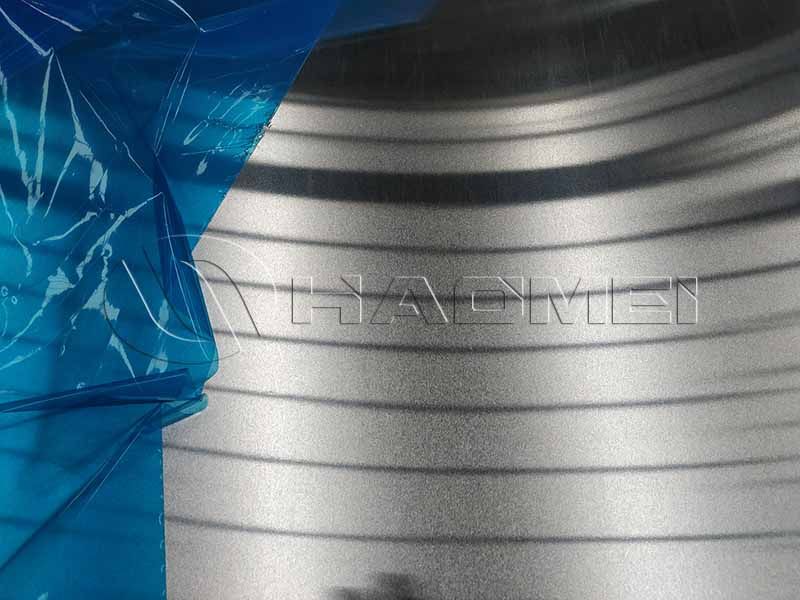
1. Mechanical Properties and Hardness
Performance Indicator | 3105 H14 | 3105 H24 | Explanation of Differences |
Tensile Strength (MPa) | 150–200 | 150–200 | Overall strength is comparable. |
Yield Strength (MPa) | ≈130 | ≈120 | H14 has higher yield strength and greater rigidity against deformation. |
Elongation at break (%) | 2 (across the full thickness range) | 4–5 (increases with thickness) | H24 offers doubled ductility and greater forming tolerance. |
Internal residual stress | Higher | Lower (relieved by tempering) | H24 is less prone to warping or cracking during subsequent processing |
Relative Hardness | Higher | Moderate | H14 offers slightly superior surface wear resistance. |
2. Key Impact of Hardness on Forming Processes
Differences in strength, plasticity, and residual stress directly alter the process parameters and yield rates for the three core operations—bending, stamping, and machining—and serve as the primary basis for material selection in production.
2.1 Bending: Springback, Cracking, and Minimum Bend Radius
Bending is the most common processing method for 3105 sheet metal, and the performance differences between the two tempers are immediately apparent:
- 3105 H14: Characterized by high yield strength, low plasticity, and high residual stress. It exhibits significant springback during bending, requiring a larger bend compensation angle. The minimum bend radius must be controlled within 2.5t–3t (where t is the sheet thickness); going below this radius makes the material highly prone to cracking of the outer fibers or bursting at the bend line. High residual stress can also lead to warping due to post-bending aging, making flatness control difficult in subsequent steps.
- 3105 H24: Tempering improves plasticity and relieves stress. Springback is 10%–15% lower than that of H14, simplifying bend compensation. The minimum bend radius can be reduced to 1t–2t, enabling complex bends such as narrow flanges and sharp corners with virtually no risk of edge cracking, while offering superior dimensional stability after bending.
2.2 Stamping and Deep Drawing: Forming Capability and Yield Rate
Stamping and drawing place extremely high demands on material ductility, making them the key processes for distinguishing the application scenarios of the two tempers:
- 3105 H14: Elongation is only 2%, resulting in a narrow forming window. It is suitable only for low-deformation operations such as shallow stamping, simple blanking, and flat embossing. When used for deep drawing, flanging, or local bulging, it is highly prone to tearing, necking, and "orange peel" surface defects, resulting in low yields during mass production.
- 3105 H24: Ductility optimized through tempering makes it suitable for medium-difficulty stamping, capable of handling complex operations such as shallow-to-deep drawing, irregular flanging, and cavity forming. The material flows uniformly, minimizing stress concentration, and yields a smooth surface finish after stamping; it is particularly well-suited for forming pre-coated aluminum coils, making it the preferred choice for decorative stamped parts.
2.3 Manufacturing Processes: Cutting, Welding, Roll Forming, etc.
- Cutting and Shearing: H14 has higher hardness, leading to faster blade wear and a tendency for burrs to form on thin sheets; H24 has moderate hardness, resulting in clean cut edges, minimal burrs, and reduced post-processing requirements.
- Welding: Both tempers exhibit similar welding performance and are compatible with TIG and MIG welding; however, the high residual stress in H14 can cause deformation around the weld seam, whereas H24—having undergone stress-relief annealing—offers better control over flatness, eliminating the need for post-weld leveling.
- Continuous Roll Forming: H14 is suitable for long roll-formed parts with simple cross-sections, offering sufficient rigidity to resist deformation; H24 is ideal for continuous roll forming involving multiple passes and complex cross-sections, ensuring smooth forming without jamming or cracking.
3. Precise Application Scenarios for 3105 H14 vs. H24
Based on performance, processing characteristics, and industry-standard use cases, the application boundaries for these two tempers are clearly defined. The core selection principle is: choose 3105 h14 aluminum for high rigidity and minimal forming, and choose 3105-H24 for applications requiring multiple bends or stamping operations.
3.1 Typical Applications for 3105 H14 (Prioritizing Rigidity and Simple Forming)
Characterized by high yield strength and rigidity, this temper is suitable for applications requiring structural stability but no complex forming:
- Construction: Straight roofing panels, flat exterior wall panels, and simple water stops (straight installation, minimal bending);
- Transportation: Flat traffic sign backings and guardrail panels (prioritizing wind-load rigidity; no complex shaping required);
- Industry: Flat equipment guards, simple flat ventilation panels, and photovoltaic backsheet substrates;
- Packaging: Flat aluminum foil lids and rigid backing plates (no deep-drawing or stretch-forming required). Key Advantages: Resistant to deformation during long-term use, highly resistant to dents from external forces, and maintains superior flatness during storage and transport.
3.2 3105 H24 Typical Applications (Prioritizing formability and balanced strength)
Characterized by high ductility and low internal stress, this grade is ideal for applications requiring multiple bending, stamping, or complex shaping operations; it is currently a mainstream specification in the market:
- Architectural Decoration: Decorative ceiling panels, custom-shaped wall cladding, gutters and downspouts, residential exterior siding (requiring multi-stage bending);
- HVAC: Custom-shaped air ducts, elbows, and vent components (produced via continuous roll forming and localized stamping);
- Packaging & Hardware: Beverage bottle caps, cosmetic caps, and shallow-drawn housings (key stamped components);
- Home Appliances: Air conditioner panels, decorative ventilation parts, and small appliance casings (aesthetic components requiring defect-free forming).
https://www.alsheetplate.com/a/3105-h14-and-3105-h24-aluminum-plate-applications.html