




1050 VS 1060 VS 1100 Soft Aluminum Sheet: Which Alloy Is Best for Deep Drawing
Oct 28 26
Deep drawing requires aluminum with excellent ductility, stable elongation, and low risk of cracking during forming. For cookware, lighting reflectors, cosmetic containers, caps, and decorative stamped parts, 1050, 1060, and 1100 are common choices. Although all belong to the commercially pure aluminum family, their chemistry and forming behavior differ enough to affect production results.
Quick Alloy Comparison
Alloy | Minimum Aluminum Content | Key Characteristics | Typical Deep-Drawing Use |
1050 | 99.50% | High ductility, good corrosion resistance, economical | General stamped and drawn parts |
1060 | 99.60% | Very high purity, excellent conductivity and formability | Reflectors, decorative products, electrical applications |
1100 | 99.00% | Good formability with slightly higher strength | Cookware, chemical equipment, drawn containers |
All three alloys are non-heat-treatable. Their final properties depend heavily on temper, especially whether the material is supplied in the annealed O temper.
1050: A Cost-Effective Choice for General Deep Drawing
1050 soft aluminum sheet is widely used where high formability is required but extreme strength is not necessary. Its high aluminum content gives it good elongation, corrosion resistance, and surface quality.
For standard deep-drawn parts, 1050-O is often a reliable and economical option. It performs well in applications with moderate drawing depth, such as lamp components, simple housings, signage, and decorative pressings.
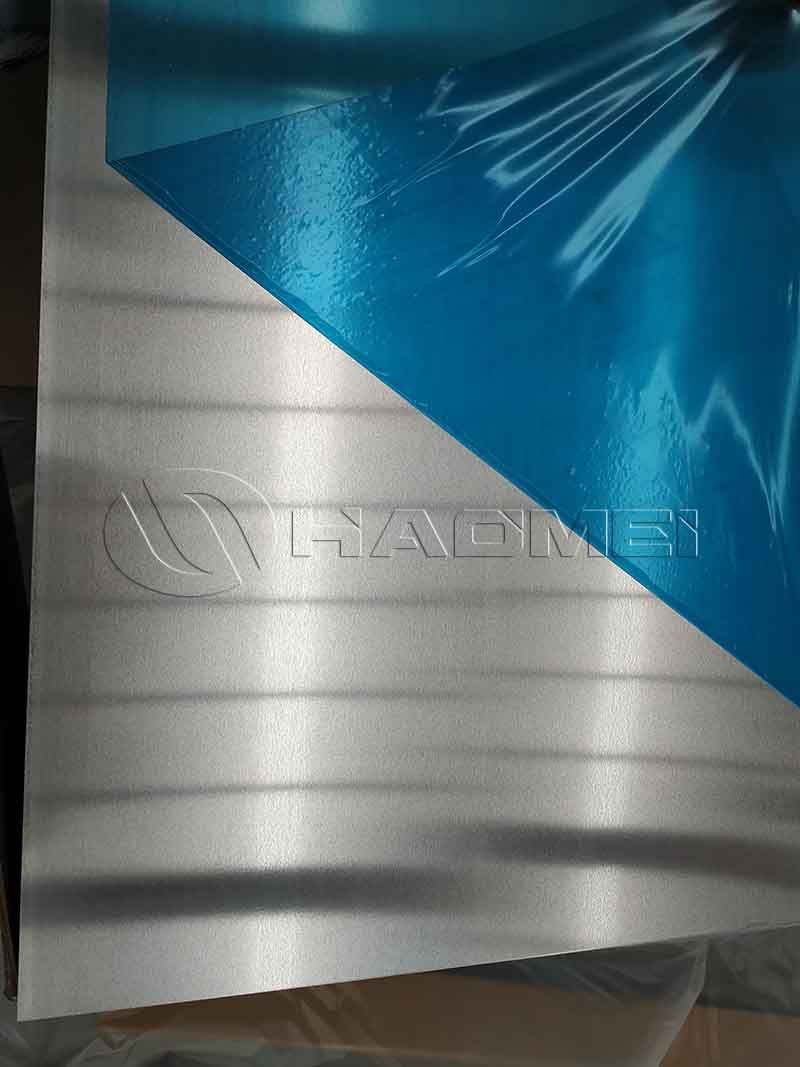
However, because it is very soft in the annealed condition, 1050 may be more prone to dents or deformation after forming. It is best suited to products where dimensional rigidity is less critical or where later assembly adds support.
1060: Best for Maximum Purity and Excellent Formability
1060 contains slightly more aluminum than 1050, giving it excellent ductility and electrical conductivity. It is especially valued when high reflectivity, a clean surface, or superior conductivity is important.
In deep drawing, 1060-O can handle demanding deformation with a low risk of edge cracking when tooling, lubrication, and blank-holder pressure are properly controlled. It is a strong choice for reflectors, spun or drawn lighting components, high-purity decorative products, and electrical parts.
Compared with 1050, the practical forming difference may be small in many applications. The decision often depends on customer specifications, surface requirements, conductivity needs, and material availability. If the final product needs a highly formable and visually clean flexible aluminum sheet, 1060 is frequently preferred.
1100: The Best All-Round Option for Many Drawn Parts
1100 aluminum contains small additions of other elements, particularly copper, compared with 1050 and 1060. These additions provide slightly higher strength while preserving very good corrosion resistance and workability.
For many deep-drawing operations, 1100-O offers the best balance between formability and post-forming rigidity. It is commonly used for cookware, food-processing equipment, chemical containers, heat-exchanger components, and drawn metal shells.
Because it has somewhat higher strength than 1050 and 1060, 1100 may provide better shape retention after forming. This can be useful for parts with deeper walls, tighter dimensional requirements, or applications that require additional handling strength.
Which Alloy Should You Choose?
The best choice depends on the product’s performance requirements:
Choose 1050-O for economical general-purpose drawing and stamping.
Choose 1060-O when maximum purity, conductivity, reflectivity, or very high ductility is required.
Choose 1100-O when you need excellent deep-drawing performance plus slightly better strength and shape retention.
For most industrial deep-drawing projects, 1100-O is usually the most balanced choice. For highly decorative, conductive, or reflective applications, 1060-O may be the better option. Whatever alloy you select, successful deep drawing also depends on the correct temper, sheet thickness, die radius, lubrication, and drawing ratio.