




1060 Aluminum Alloy Price
Jul 23 26
A quoted 1060 aluminum alloy price should never be evaluated as a single number per tonne. For industrial sourcing, the largest avoidable cost is often a mismatch between quoted material and delivered condition: wrong temper, insufficient width tolerance, surface defects, or missing inspection records.
1060 is a commercially pure aluminum grade with a minimum aluminum content of 99.60%. It offers high electrical and thermal conductivity, good corrosion resistance, and strong formability. It is commonly selected for electrical parts, heat-transfer components, chemical equipment, reflectors, and formed products.
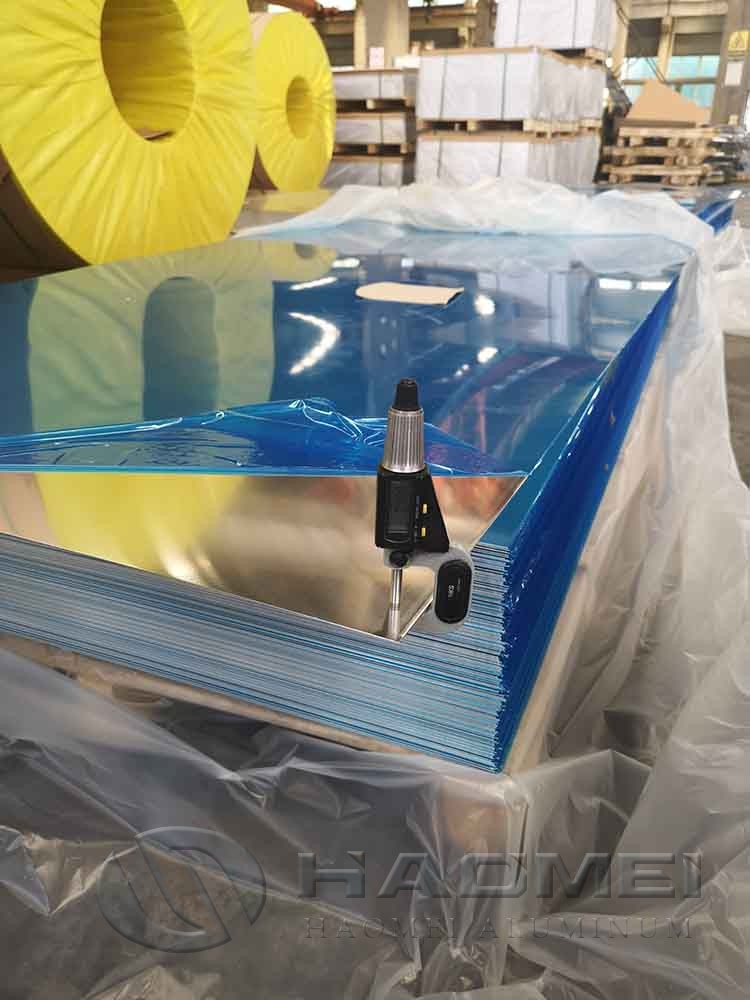
What Determines the 1060 Aluminum Alloy Price
The market aluminum reference is only one component of the delivered cost. A useful quote separates metal value, conversion cost, packaging, certification, transport, and commercial terms.
| Cost element | What changes it | What to request in the quotation |
|---|---|---|
| Primary aluminum basis | Exchange reference, pricing date, currency, pricing period | Named aluminum index, settlement date, currency, and adjustment method |
| Conversion charge | Thickness, width, temper, production route, tolerance | Separate conversion charge per kg or tonne |
| Dimensional tolerance | Tight gauge, width, camber, flatness, edge condition | Applicable standard and agreed tolerance table |
| Surface requirement | Mill finish, protective film, oil level, scratch limits | Surface acceptance standard and inspection method |
| Documentation | Chemical analysis, mechanical test report, compliance statement | Certificate type, heat traceability, test frequency |
| Logistics | Incoterms 2020 term, packing, destination, insurance | Delivery term, port or site, packing specification |
For price comparison, normalize every offer to the same basis:
- Confirm the aluminum index and pricing date.
- Convert all offers to the same currency and net weight unit.
- Separate freight, tax, duties, and local handling from material cost.
- Compare identical dimensions, temper, tolerance, and test-document requirements.
- Verify whether quoted weight is theoretical, actual scale weight, or invoiced weight.
Theoretical weight helps validate a quotation. Using aluminum density of approximately 2.70 g/cm³, calculate flat-product mass as:
Weight in kg = length in m × width in m × thickness in mm × 2.70
For coiled material, use the certified net weight rather than an estimate. A lower unit rate can become more expensive when actual thickness is above nominal, coil geometry is unsuitable for the production line, or usable yield is reduced by edge cracking and surface rejection.
For applications requiring plate thickness, specify the needed temper and inspection scope with 1060 Aluminum Alloy Plate rather than accepting a generic 1060 designation.
Standards, Properties, and Inspection Requirements
The 1060 designation identifies composition, not a complete purchasing specification. The order must also define product form, temper, dimensions, tolerance, finish, and governing standard.
Common standards include ASTM B209/B209M for aluminum and aluminum-alloy plate, sheet, and rolled products; EN 573-3 for chemical composition; EN 485 series for tolerances and mechanical properties of rolled products; and GB/T 3880 for aluminum and aluminum-alloy plate and strip. Foil may require a standard suited to the end use, such as ASTM B479 where its scope applies.
Under Aluminum Association designation practice, 1060 has a minimum aluminum content of 99.60%. Composition limits must be verified against the exact invoked standard and revision, because a certificate format alone does not establish compliance.
| Grade | Minimum aluminum content | Practical sourcing distinction |
|---|---|---|
| 1050 | 99.50% | Widely used for forming and general industrial work |
| 1060 | 99.60% | Higher-purity option often specified for conductivity and forming applications |
| 1100 | 99.00% | Contains controlled copper and can provide different strength behavior |
Where 1050 is technically acceptable, compare availability and conversion charges against 1050 O H14 H18 Aluminium Sheet. Do not substitute grades solely on nominal purity. Electrical performance, forming behavior, corrosion exposure, fabrication method, and customer drawing requirements govern the selection.
Temper is equally important. O temper provides maximum formability but lower strength. H14 is strain-hardened to a half-hard condition and is commonly selected where improved handling stiffness is needed. H18 has higher hardness and strength but lower formability. Tensile strength and elongation requirements vary with temper and thickness, so they must be taken from the applicable standard table rather than copied from a generic data listing.
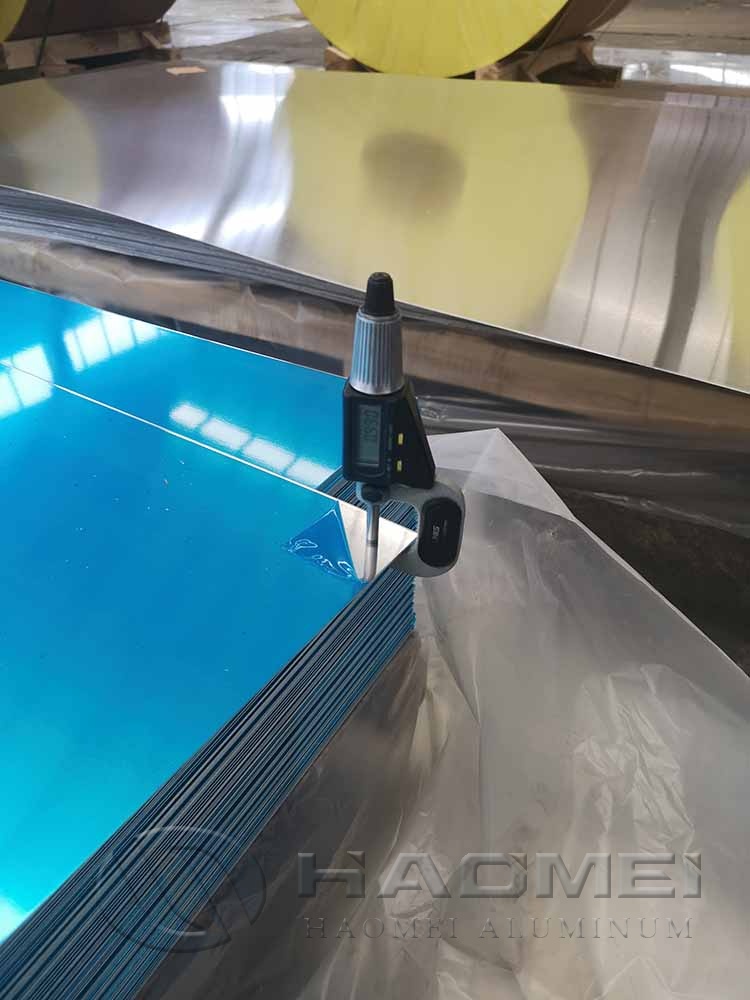
Use this incoming-inspection checklist before releasing material to production:
- Match certificate heat number, material marking, packing label, and invoice.
- Check chemical composition by certified heat analysis against the invoked standard.
- Confirm temper and mechanical test results. Tensile testing is commonly performed using ASTM E8/E8M methods when required by the material specification.
- Measure thickness at agreed positions using calibrated equipment. State whether edge readings are included or excluded.
- Check width, length, coil inside diameter, outside diameter, camber, and flatness against the purchase order.
- Inspect both faces under agreed lighting for dents, scratches, roll marks, stains, oil, and protective-film defects.
- Retain samples and inspection records when the material is used in electrical, food-contact, transportation, or regulated equipment.
Selecting the Right Supply Condition and Writing the Order
Specify the end-use risk first. For deep drawing, prioritize O temper, consistent grain structure, low residual stress, and a documented bend or forming trial. For electrical conductors, prioritize certified composition, electrical testing where required, stable gauge, and clean surfaces. For decorative or reflector applications, define reflectance, surface roughness, film type, and allowable visual defects separately.
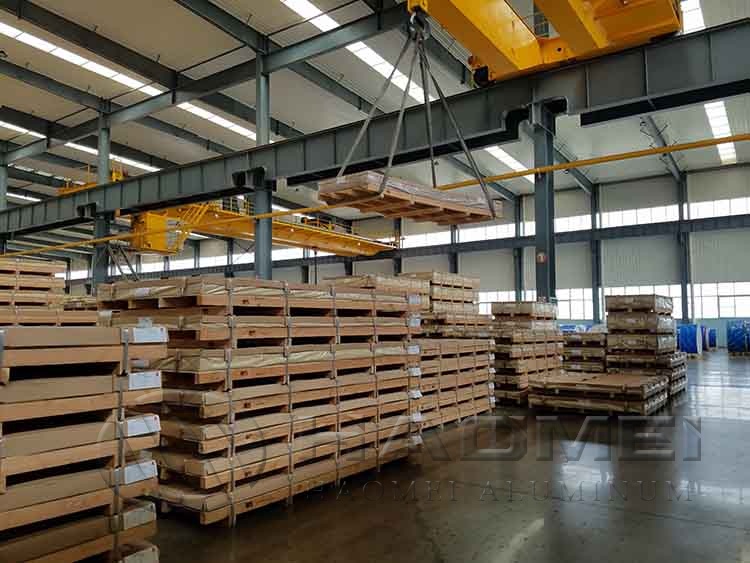
Use the following order-control table to prevent ambiguous quotes and material disputes.
| Order item | Minimum instruction to include |
|---|---|
| Product form | Plate, cut sheet, coil, narrow strip, or foil; specify dimensions and tolerances |
| Alloy and temper | 1060-O, 1060-H14, or other required condition |
| Standard | State standard number, revision if contractually required, and any project specification |
| Surface | Mill finish, film-protected finish, lubricated or dry condition, permitted defect level |
| Edge | Mill edge, slit edge, deburred edge, or other defined condition |
| Coil data | Net weight range, inside diameter, maximum outside diameter, winding direction |
| Testing | Certificate content, chemical analysis, tensile test, dimensional inspection, additional tests |
| Packaging | Pallet type, moisture protection, separators, corrosion prevention, label information |
| Commercial terms | Price basis, metal-index date, currency, payment condition, Incoterms 2020 location |
A technically complete request should state the annual or scheduled quantity, release pattern, required delivery window, and allowable substitution policy. Ask suppliers to identify any deviation before production, especially changes to thickness tolerance, temper, coil weight, packaging, or certificate scope.
For repeat orders, track three operational metrics: delivered gauge variation, usable yield after processing, and nonconformance rate. These measures reveal whether a nominally lower 1060 material offer is actually competitive after stamping, slitting, forming, or electrical assembly.
https://www.alsheetplate.com/a/1060-aluminum-alloy-price.html