




How to Choose the Right Aluminum Sheet Thickness for Your Project
Jul 22 26
Aluminum sheets are lightweight, corrosion-resistant, easy to process, and aesthetically pleasing and durable, making them a common material in architectural curtain walls, industrial manufacturing, and interior decoration. How do you choose the right aluminum sheet thickness and size for your project? Let's discuss this in detail below.
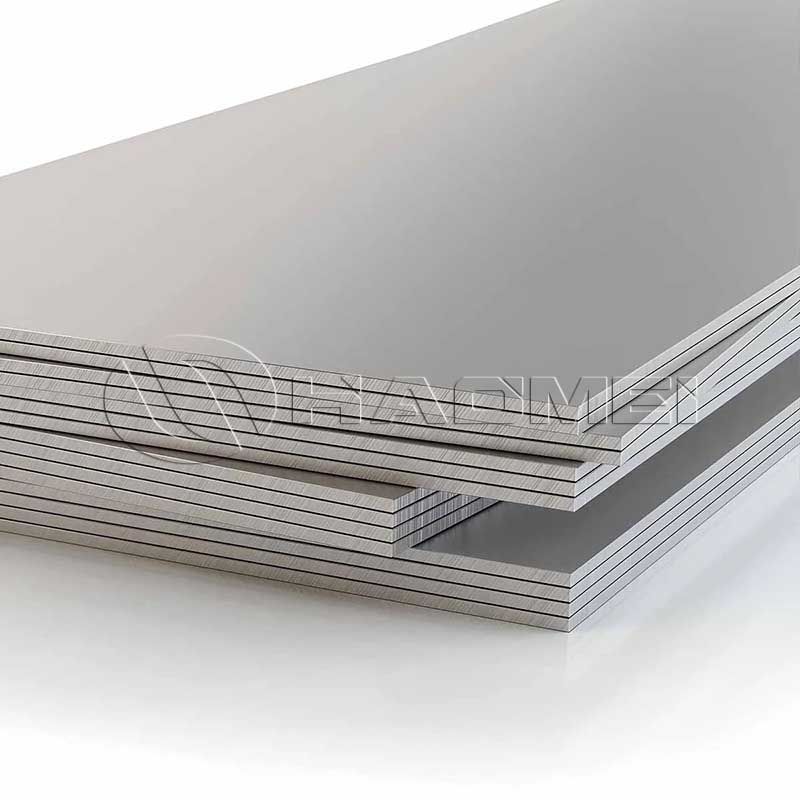
I. Aluminum Sheet Thickness Selection
Choosing the right aluminum sheet thickness is crucial, as it directly affects the sheet's load-bearing capacity, flatness, and wind and pressure resistance. Thickness selection depends primarily on the usage environment, stress conditions, and processing technology, and must also adhere to relevant industry standards.
1. Following International Standards
Different scenarios have clearly defined standard aluminium sheet thickness; these are the minimum requirements. For single-layer aluminum sheets used in architectural curtain walls, the base material thickness should not be less than 2.5mm, the main load-bearing surface is recommended to be no less than 3.0mm, and auxiliary parts should be no less than 2.0mm. For interior decoration, such as ceilings and feature walls, 1.0mm-2.0mm is sufficient; there's no need to choose excessively thicker sheets.
The thickness of aluminum sheets in industrial applications is also important: Equipment casings and components are selected based on load-bearing and impact resistance requirements; patterned aluminum sheets for anti-slip platforms range from 0.1mm to 8.0mm in thickness, adjusted according to usage needs; anti-corrosion aluminum roofing sheets for power plants and chemical plants commonly use 0.3mm-1.5mm thickness, with corrosion resistance being the primary consideration.
2. Considering the Usage Scenarios and Stress Conditions
Besides standards, actual stress conditions are crucial for selecting the thickness. A breakdown by scenario provides clarity:
Building curtain walls: For low- to mid-rise buildings under 50 meters, 2.5mm thickness is sufficient for wind resistance; for high-rise buildings between 50 and 100 meters, 3.0mm thickness is recommended, paired with a dense framing system; for super high-rise buildings over 100 meters, 3.0mm or thicker is required, with additional reinforcement in some areas. Furthermore, the larger the size of the curtain wall aluminum sheet, the higher the required thickness to prevent deformation.
Interior Decoration: For ceilings, use 1.0mm-2.0mm thick aluminum sheets for lightweight installation; for feature walls and furniture panels, choose 1.5mm-2.5mm thick. If bending or carving is required, the thickness should not be less than 1.0mm to prevent cracking and deformation.
Industry and Transportation: Heavy equipment base panels can use 5.0mm-8.0mm thick aluminum sheets; vehicle and ship cabins commonly use 3.0mm-5.0mm thick aluminum sheets, balancing lightweight and impact resistance; 0.5mm-1.5mm thick aluminum sheets are sufficient for electronic appliance casings.
3. Consider Processing Technology
Processing technology also affects thickness selection. For aluminum sheets requiring stamping, bending, and stretching, thin sheets are prone to deformation and cracking, while thick sheets are difficult to process and costly. For aluminum sheets requiring multiple bends, the thickness should be controlled between 1.0mm-3.0mm; for stamped parts, the thickness should not exceed 5.0mm, and ease of transportation and installation should also be considered.
II. Aluminum Panel Size Selection
The main considerations for selecting aluminium sheet sizes are width and length. The core principles are material saving, improved construction efficiency, and suitability for the installation space. Aluminum panel sizes are divided into standard and non-standard custom sizes; choose according to your needs.
1. Standard Sizes
Standard-sized aluminum panels are readily available, inexpensive, and easy to transport and process, suitable for routine projects. Common widths include 1000mm and 1220mm, and lengths include 2000mm and 2440mm, with 1220mm × 2440mm being the most commonly used specification.
When selecting standard sizes, consider the installation space and layout to minimize cutting and avoid waste. For example, using 1220mm × 2440mm aluminum panels for indoor ceilings reduces scrap material and improves construction efficiency.
2. Non-standard Custom Sizes
When there are special designs or irregular installation spaces, non-standard sizes are required, such as irregularly shaped building panels or panels for special equipment. Custom sizes perfectly fit the project and reduce waste, but the lead time is longer and the price is slightly higher.
Two points to note when customizing dimensions: First, the larger the size, the thicker the aluminum plate needs to be to prevent deformation; second, communicate with the manufacturer in advance to confirm that their equipment can meet the customization requirements, and take protective measures during transportation and installation to avoid bumps and deformation.
3. Core Principles of Size Selection
The core of size selection is to save materials and improve efficiency. Before determining the size, accurately measure the installation space to ensure the aluminum plate size matches the installation grid as much as possible. For example, if the installation grid width is 1200mm, prioritize choosing a 1220mm wide aluminum plate to reduce waste.
Transportation and installation must also be considered. Aluminum plates that are too long or too wide are prone to deformation, and installation is more troublesome and costly. A balance must be struck between aesthetics and practicality.
III. The Relationship Between Thickness and Size
The thickness and size of the aluminum plate are interdependent and cannot be selected independently. Simply put, the larger the size, the higher the required thickness; the thinner the thickness, the smaller the available size.
For example, 1.0mm thick aluminum sheets have poor rigidity and cannot be used for large sizes like 3000mm x 1500mm, as they are prone to bending and denting. 3.0mm thick aluminum sheets, on the other hand, have good rigidity and can accommodate larger sizes. For small interior panels, thinner aluminum sheets are sufficient, avoiding wasted costs.
When selecting materials, first determine the thickness range based on the application scenario, then select the size accordingly; alternatively, determine the size first, then adjust the thickness to ensure it meets usage requirements. Cost should also be considered; choose the combination with the highest cost-effectiveness while ensuring performance meets specifications.