




1100 H18 VS1100 H14 Aluminum Sheet
Jun 09 26
1100 pure aluminum sheets do not require heat treatment for strengthening; their mechanical properties are primarily adjusted through cold work hardening. Among these, H14 semi-hard and H18 fully hard are the most widely used and consumed types. Both types of aluminum sheets have the same base material composition; the core difference lies in the different cold work reduction rates. This results in significant differences in hardness, toughness, and formability, adapting to different application scenarios and leading to differentiated purchasing preferences among customers in different regions globally.
The essential difference between H14 and H18 is the degree of cold work hardening. H14 is a semi-hard state with a moderate degree of cold work hardening, balancing strength and toughness; H18 is a fully hard state, maximizing cold work processing to achieve the peak hardness and strength of conventional 1100 aluminum sheets, but sacrificing some formability.
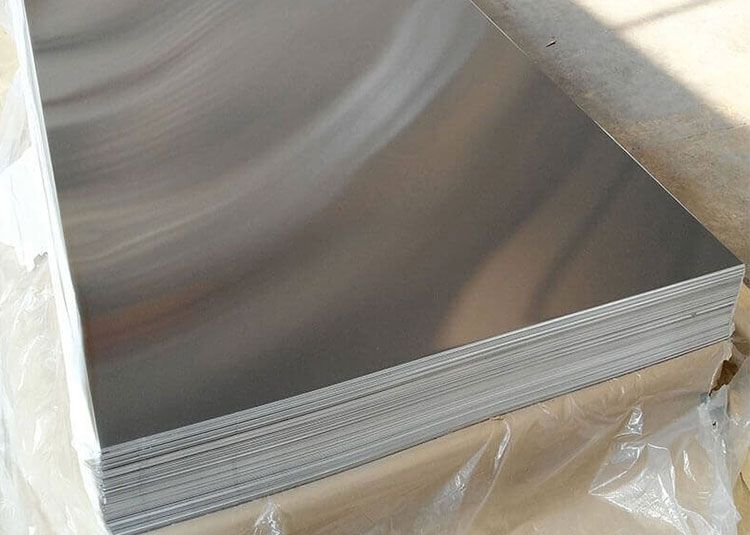
In terms of performance, 1100 h18 aluminum sheet has a significant rigidity advantage. 1100-H14 aluminum sheets have moderate tensile strength and stable rigidity, meeting the requirements of conventional static use. H18 aluminum sheets undergo thorough cold hardening treatment, resulting in higher tensile strength, significantly improved hardness, extrusion resistance, dent resistance, and wear resistance, and enhanced structural stability, making them suitable for complex working conditions requiring long-term load-bearing and impact resistance.
Formability is the core dividing line between the two materials. 1100 h14 aluminum sheet is suitable for complex processing techniques. 1100 H14 aluminum sheets have good toughness and high elongation, exhibiting excellent forming performance in bending, stamping, and deep drawing. They are less prone to cracking and have low springback during complex shaping, resulting in extremely high processing tolerance and yield.
In contrast, 1100 H18 aluminum sheets have significantly reduced plasticity and low elongation, allowing only simple straight-line processing. Complex bending and deep drawing processes easily cause cracking, severely limiting their processing capabilities.
Both types of aluminum sheets use 1100 pure aluminum as their base material, possessing the same basic properties. They are characterized by excellent corrosion resistance, oxidation resistance, and thermal and electrical conductivity, and are weldable, paintable, and anodized. There is no difference in material quality; all differences lie solely in their mechanical processing properties.
In terms of application scenarios, the two have clearly defined roles. 1100 H14 is characterized by its ease of shaping and secondary processing, making it ideal for irregularly shaped applications. It's the preferred material for complex molding applications such as irregularly shaped curtain walls and ceilings in architectural decoration, signage and ventilation duct bending parts in the hardware industry, irregularly shaped heat sinks, casings, and kitchenware stretching parts in the home appliance industry, and food packaging containers.
1100 H18 is characterized by its high rigidity, wear resistance, and non-deformation, making it suitable for heavy-duty, wear-resistant applications without complex processing. In the industrial sector, it's commonly used for vehicle flooring, industrial floors, equipment protective panels, and chemical storage tank linings, resisting long-term wear and external impacts. In the construction sector, it's widely used for straight components such as flat panels, wall panels, and louvers. In precision applications, it can be used to manufacture aluminum gaskets, rigid conductive components, bottle caps, and other accessories, relying on its high hardness to ensure dimensional stability.
Purchasing preferences vary significantly across different regional markets globally. In Southeast Asia and the Middle East, 1100 H14 aluminum sheets are the primary choice, with 1100 H18 as a secondary option. Local demand for building decoration and small-to-medium-sized custom hardware is strong, heavily reliant on the sheet's ability to create irregular shapes. Only industrial load-bearing applications use H18 in small quantities.
In Europe and America, 1100 H18 aluminum sheets are preferred. Local manufacturing standards are stringent, emphasizing product durability and stability. High-rigidity, deformation-resistant H18 sheets are commonly used in industrial equipment, precision electrical appliances, and high-end packaging to reduce maintenance costs. 1100 H14 is used only in niche, irregularly shaped decorative applications.
In Japan and South Korea, material selection is highly refined, with no fixed preference; selection is entirely based on need. 1100-H18 is used in precision electronics and rigid components to ensure dimensional accuracy, while 1100-H14 is consistently used in stretching processes such as appliance casings and decorative profiles.
In South America, the usage of 1100 H14 and H18 is balanced, with a focus on cost-effectiveness and practicality. In conventional molding scenarios such as civil decoration, light industrial hardware, and pipe processing, the cost-effective 1100-H14 alloy is commonly used; while in heavy-duty wear-resistant scenarios such as agricultural equipment, logistics vehicles, and industrial storage mats, 1100-H18 aluminum is the only material that is needed. The material selection logic is clear and the demand is stable.
https://www.alsheetplate.com/a/1100-h18-vs1100-h14-aluminum-sheet.html