




5005 Aluminium Sheet
Jun 05 26
5005 aluminium sheet for anodized panels: control color first
5005 aluminium sheet is a non-heat-treatable Al-Mg alloy selected mainly for architectural panels, trim, signs, appliance panels, and enclosures where corrosion resistance, formability, and anodized appearance matter more than high structural strength. Its top procurement concern is not tensile strength. It is anodized color consistency across batches.
Within the 5000 Series, 5005 has lower magnesium than 5052, 5754, or 5083. That gives it moderate strength, good workability, and a surface that can anodize more uniformly than many general-purpose alloys when the mill controls chemistry, rolling practice, and surface finish.
Standards, composition, and properties to specify
For international orders, use recognized standards instead of relying on informal grade names. ASTM B209/B209M covers aluminum alloy sheet and plate. EN 573-3 defines chemical composition. EN 485-2 covers mechanical properties, while EN 485-3 and EN 485-4 cover dimensional tolerances for hot-rolled and cold-rolled flat products. ISO 6361 is also used for wrought aluminum flat products. For China-origin material, GB/T 3880 is commonly referenced.
Typical 5005 chemistry is defined by standards, but always require the mill test certificate to show actual values.
| Element | Typical standard limit for alloy 5005 |
|---|---|
| Mg | 0.50-1.10% |
| Fe | Max 0.70% |
| Si | Max 0.30% |
| Cu | Max 0.20% |
| Mn | Max 0.20% |
| Cr | Max 0.10% |
| Zn | Max 0.25% |
| Al | Remainder |
Common tempers include O, H32, H34, and H36. H32 and H34 are popular for panels because they balance strength and bendability. For orders centered on stabilized tempers, specify 5005 H32 H34 Aluminium Sheet with thickness, width, finish, and applicable standard in the purchase document.
| Temper | Practical use | Screening mechanical range, varies by thickness |
|---|---|---|
| O | Deep forming, spinning, soft parts | Lowest strength, highest elongation |
| H32 | Panels, trim, moderate bending | Typical tensile range about 125-165 MPa |
| H34 | Flatter panels, stronger trim | Typical tensile range about 145-185 MPa |
| H36 | Higher stiffness, limited forming | Higher strength, lower elongation |
Use these values only for alloy selection. Release criteria must come from the named ASTM, EN, ISO, or GB/T table for the ordered thickness.
Anodizing performance: the main quality risk
5005 is often chosen for clear, bronze, champagne, black, or dyed anodizing. The risk is shade variation after anodizing, especially when panels for one elevation come from different coils or production batches.
Control this issue before production:
- Specify anodizing quality surface, not only mill finish.
- Require the same cast or controlled batch grouping for one visible facade zone.
- Approve a pre-production anodized sample at the final anodizer, not only at the mill.
- Set an acceptable color range using agreed Lab* values or approved limit samples.
- Avoid mixing hot-rolled and cold-rolled sources on the same visible project.
- Record grain direction for brushed or satin surfaces.
Useful anodizing references include ISO 7599 for anodized aluminum and AAMA 611 for architectural anodized finishes in North America. Coating thickness can be measured by eddy current methods such as ISO 2360. Salt spray testing, such as ASTM B117, may support corrosion comparison, but it does not prove visual color consistency.
5005 vs 3003, 5052, and 5754
Choose the alloy by function, not only price. 5005 is rarely the strongest choice, but it is often the safer selection for decorative anodized work.
| Alloy | Strength | Formability | Corrosion resistance | Anodized appearance | Best fit |
|---|---|---|---|---|---|
| 3003 | Low-medium | Very good | Good | Fair to moderate | General panels, ducting, painted parts |
| 5005 | Medium | Good | Good | Good when controlled | Architectural anodized panels, signs, trim |
| 5052 | Higher | Good | Very good | Can be less uniform | Marine fittings, cabinets, formed parts needing strength |
| 5754 | Higher than 5005 | Good | Very good | Application dependent | Transport panels, welded structures, flooring |
| 5083 | High | Moderate | Excellent marine performance | Not preferred for decorative anodizing | Marine plate, pressure and structural parts |
If the part will be welded, exposed to severe marine service, or used structurally, review 5052, 5754, 5083, or 5086 instead. If the surface will be anodized and placed in a visible architectural area, 5005 is often the practical starting point.
Inspection and testing plan for incoming material
A reliable receiving plan should match the failure modes of the product. For 5005, that means chemistry, temper, dimensions, surface, and anodizing response.
| Item | Test or document | Practical acceptance point |
|---|---|---|
| Grade | Mill test certificate, optical emission spectroscopy such as ASTM E1251 | Chemistry matches 5005 limits |
| Temper | Certificate plus tensile testing such as ASTM E8/E8M or ISO 6892-1 | Meets ordered H temper values |
| Bendability | ASTM E290 or agreed shop bend trial | No cracking at specified radius |
| Thickness and width | ASTM B209 or EN 485 tolerance checks | Within ordered tolerance class |
| Surface | Visual inspection under agreed lighting | No stains, roll marks, scratches beyond limit sample |
| Anodizing | Trial anodize to ISO 7599 or project procedure | Approved color and coating thickness |
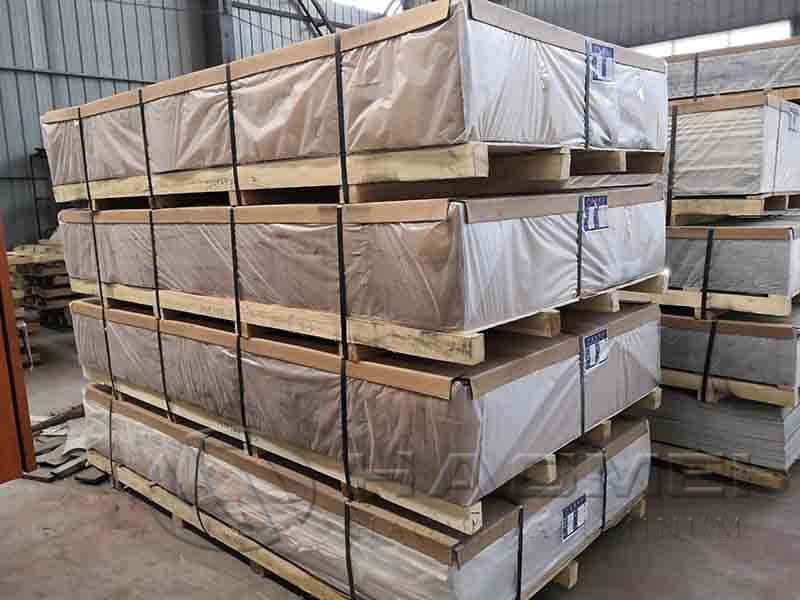
| Packaging | Moisture barrier, edge protection, pallet condition | No water staining or transit damage |
For brushed, hairline, or pre-treated surfaces, add protective film adhesion checks and surface roughness checks. Film that is too aggressive can leave residue after fabrication; film that is too weak may fail during cutting or routing.
Purchase specification checklist
Use a written specification that leaves no room for substitution.
- Alloy: 5005, with the applicable standard, such as ASTM B209/B209M or EN 573-3 plus EN 485.
- Temper: O, H32, H34, or other required temper.
- Thickness and tolerance: state nominal thickness and required tolerance class.
- Width, length, and squareness: include flatness requirements for panels.
- Surface: mill finish, anodizing quality, brushed, stucco, or film-protected.
- Anodizing plan: color, coating thickness, sealing method, sample approval, and batch grouping.
- Mechanical testing: tensile and bend test frequency.
- Documentation: mill test certificate, packing list, heat or coil traceability, and inspection report.
- Packaging: seaworthy packing, desiccant where needed, waterproof wrapping, and edge protection.
- Price basis: compare offers using the same LME or regional aluminum reference date, conversion charge, surface premium, packaging, freight term, and payment term.
Avoid accepting a vague substitution such as 5005 equivalent unless the supplier states the exact alloy, temper, standard, and surface route. For visible anodized work, the cheapest offer can become the most expensive option if shade variation forces panel replacement.