




What Are Optimal Alloys of Anodized Aluminum Sheet
Mar 24 26
The effect of anodizing is highly dependent on the alloy composition of the base material. Different series of aluminum alloys vary drastically in the density of the oxide film, color uniformity, and mechanical properties. Currently, the preferred alloys for anodized aluminum sheet metal are concentrated in three main categories: 1-series pure aluminum, 5-series aluminum-magnesium alloys, and 6-series aluminum-magnesium-silicon alloys. 7-series high-strength alloys are only used in special applications.
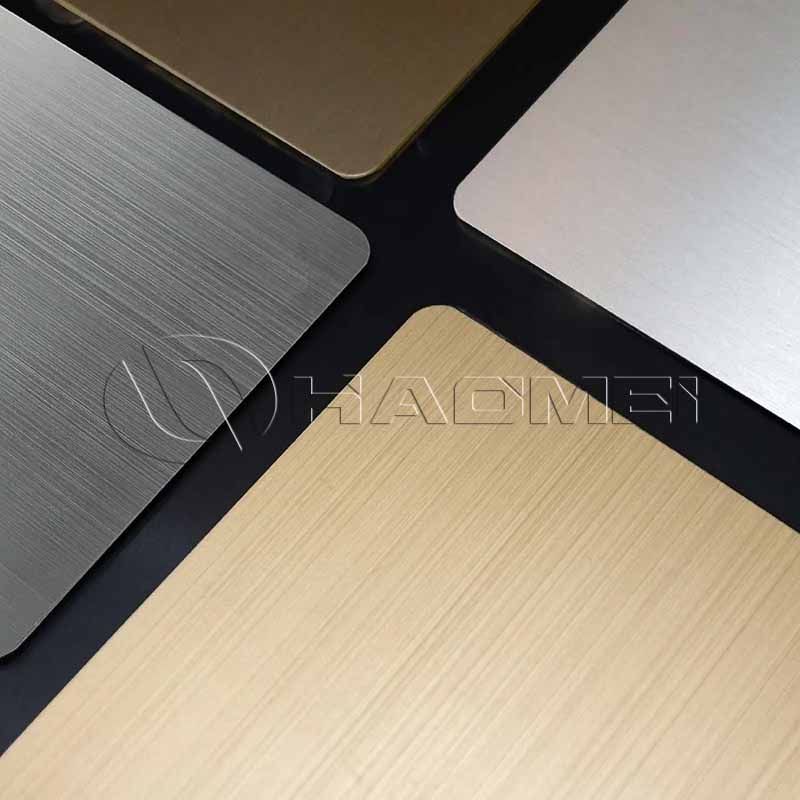
6000 Series Alloys
6-series alloys are the top choice for anodized aluminum sheets in the construction and decoration fields, balancing formability, strength, and oxidation effect. They have the highest industry recognition, with 6063 and 6061 being the core grades.
1. 6063 Alloy (Construction-Specific Anodizing Alloy)
- Core Advantages: Renowned as a "construction-specific anodizing alloy," it has extremely low impurity content, ultra-high oxide film transparency, uniform coloring with no color difference, and a delicate, bright surface. Whether naturally anodized or dyed, its appearance is impeccable. It has excellent extrusion formability, suitable for complex shapes such as curtain wall profiles, decorative lines, and door and window frames. It boasts excellent weather resistance and corrosion resistance, and is resistant to fading and chalking even after 20 years of outdoor use.
- Applicable Scenarios: High-end building curtain walls, interior decorative panels, storefront decoration, rail transit interiors, and appliance exterior components—scenarios where aesthetics and durability are paramount.
2. 6061 Alloy (Strong and Tough Anodized Alloy)
- Core Advantages: Significantly higher strength than 6063, superior weldability and impact resistance. While its anodizing effect is slightly inferior to 6063, it remains at a high level. The film layer is dense and wear-resistant. It can be hard anodized, greatly improving surface hardness, making it suitable for load-bearing structural components. Excellent corrosion resistance, suitable for outdoor and humid environments.
- Applicable Scenarios: Industrial equipment panels, automotive trim, marine interiors, and load-bearing decorative panels—scenarios requiring both strength and aesthetics.
5000 Series Alloy
5-series alloys use magnesium as the main alloying element and contain no silicon. They are the preferred choice for colored anodized aluminum sheets. The core grades are 5005 and 5052.
1. 5005 Alloy
- Core Advantages: Moderate magnesium content, extremely uniform oxide film, and color consistency far exceeding other alloys, especially suitable for light-colored and solid-color anodizing, with no color difference or dark lines; top-notch atmospheric corrosion resistance and outstanding outdoor weather resistance; excellent flatness, suitable for large-area decorative panels.
- Applicable Scenarios: Building exterior wall cladding, interior ceilings, advertising signage, colored panels for home appliances, and other scenarios with stringent color requirements.
2. 5052 Alloy
- Core Advantages: Higher strength than 5005, good plasticity, easy to bend and process, strong oxide film adhesion, wear and scratch resistant; excellent salt spray corrosion resistance, suitable for coastal and high-humidity environments; warm color and high-end texture after oxidation. 5052 black anodised aluminium sheet is very beautiful.
- Applicable Scenarios: Coastal building curtain walls, ship decoration, kitchen and bathroom panels, industrial cabinets, and other scenarios with high requirements for corrosion resistance and formability.
1000 Series Pure Aluminum
Representative Grades: 1060, 1100 (Pure Aluminum Content ≥ 99.6%)
- Core Advantages: Highest purity, fewest impurities; after anodizing, the film has maximum transparency, exhibiting a mirror-like glossy texture and excellent reflectivity; excellent corrosion resistance, good processability, and relatively affordable cost; suitable for natural anodizing, resulting in a minimalist yet sophisticated look.
- Disadvantages: Relatively low strength, unsuitable for load-bearing components, prone to deformation, only suitable for static decorative applications.
- Applicable Scenarios: Lighting reflectors, interior decorative mirrors, signage, craft panels, and other high-reflectivity, purely decorative applications.
7000 Series High-Strength Alloy
Representative Grade: 7075
- Core Advantages: Highest strength among aluminum alloys, exceptional hardness, suitable for hard anodizing to improve wear resistance; primarily used in aerospace, military, and other fields with extremely high strength requirements.
- Disadvantages: High zinc and copper content results in a darker color after anodizing, which can easily lead to color differences and poor decorative properties. It is not recommended for ordinary scenarios.
https://www.alsheetplate.com/a/what-are-optimal-alloys-of-anodized-aluminum-sheet.html