




1100 Aluminum Sheet
Apr 03 26
People searching for 1100 Aluminum Sheet want to know whether 1100 is easy to bend, whether it can be welded, how it compares with other commercially pure grades, and which temper fits actual production needs. Below are five hot questions that have appeared repeatedly in recent discussions, answered in a straightforward way for companies sourcing aluminum for fabrication, signage, cookware, lighting, chemical equipment, and decorative applications.
1. What is 1100 Aluminum Sheet mainly used for, and when should I choose it?
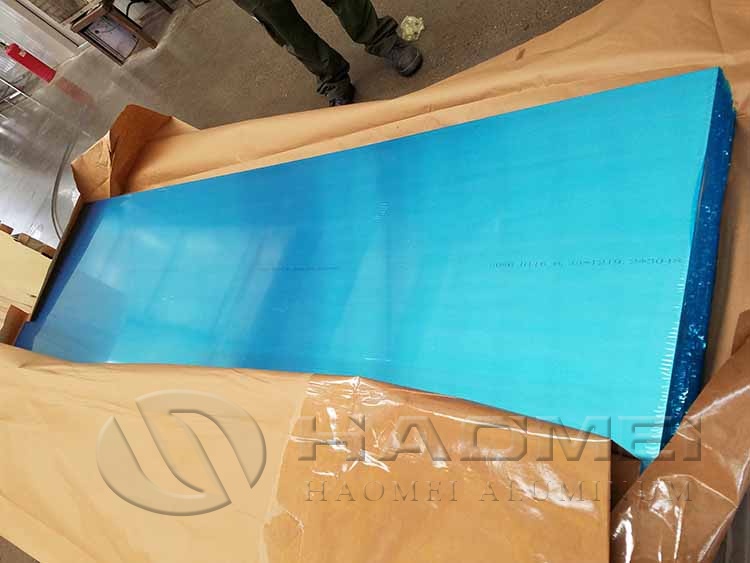
1100 Aluminum Sheet is one of the most common commercially pure aluminum materials, usually containing at least 99.0 percent aluminum. Its biggest strengths are formability, corrosion resistance, thermal conductivity, and a clean surface finish. That is why it is often chosen for nameplates, reflectors, roofing trim, insulation jacketing, cookware parts, decorative panels, and chemical handling components.
You should choose 1100 when your project values shaping and corrosion resistance more than structural strength. If a part needs deep drawing, spinning, bending, or light stamping, 1100 is often a very safe option. If the part must carry high loads or resist heavy impact, a stronger alloy may be more suitable.
Many first-time purchasers also compare it with other grades in the 1000 Series. In simple terms, 1100 is often preferred when a combination of workability and a slightly broader industrial acceptance is needed.
| Typical application | Why 1100 fits well |
|---|---|
| Signage and nameplates | Smooth surface, easy fabrication |
| Cookware and utensils | Good thermal conductivity |
| Decorative trim | Bright finish and corrosion resistance |
| Chemical equipment | Stable in many non-alkaline environments |
| Reflectors and lighting parts | High reflectivity and easy forming |
2. Is 1100 Aluminum Sheet strong enough for fabrication work?
This is one of the most common questions from new purchasers, because the word "aluminum" can create the impression that all grades perform similarly. They do not. 1100 Aluminum Sheet is not considered a high-strength alloy. It is soft compared with many heat-treatable aluminum grades, but that softness is exactly what makes it useful for forming operations.
For fabrication work such as covers, panels, shells, ducts, trim parts, and formed containers, 1100 is often strong enough. For frames, load-bearing brackets, or mechanical parts under repeated stress, it is usually not the first choice.
Here is a practical way to judge it.
| Requirement | Is 1100 a good fit? |
|---|---|
| Easy bending | Yes |
| Deep drawing | Yes |
| Decorative anodized look | Often yes, depending on finish target |
| Heavy structural support | No |
| High wear resistance | No |
| Corrosion-resistant indoor and mild outdoor use | Yes |
If your production team is debating between easier forming and higher strength, ask the supplier for the exact temper and thickness combination first. That matters as much as the alloy itself.
3. Which temper is best for 1100 Aluminum Sheet, such as O, H14, or H18?
This question has become more frequent because many new purchasers discover that alloy number alone does not tell the whole story. Temper changes the balance between softness and hardness.
1100-O is fully annealed. It is the softest option and best for deep drawing, spinning, and demanding forming work.
1100-H14 is strain-hardened to a half-hard condition. It offers a useful middle ground between formability and stiffness.
1100-H18 is harder and stronger than O or H14, but less flexible for bending and shaping.
If you need aggressive forming, O temper is usually the safer choice. If you need flatter panels with a bit more rigidity for general fabrication, H14 is commonly selected. H18 is more suitable when shape retention matters more than ductility.
For purchasers comparing product options, 1100 Aluminum Alloy Sheet is often specified by both alloy and temper together, because that is what determines shop performance.
4. Can 1100 Aluminum Sheet be welded and bent easily?
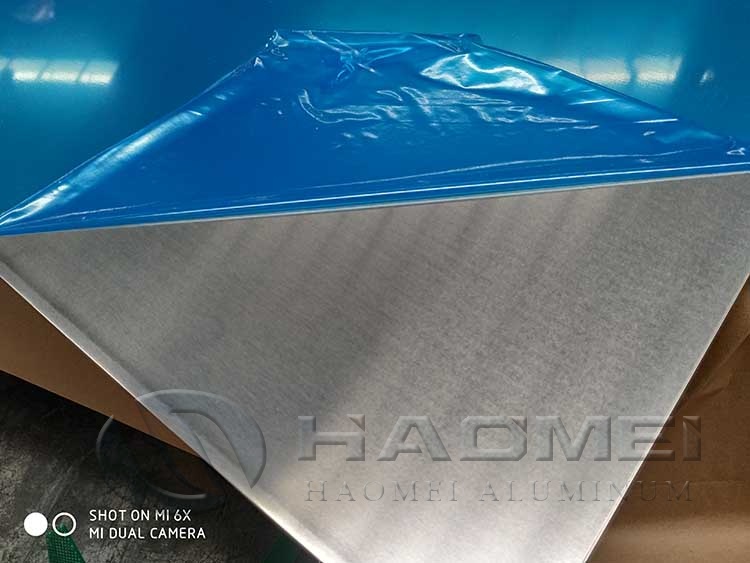
Yes, and this is one of the main reasons it stays popular. 1100 Aluminum Sheet has very good workability. It can generally be bent, rolled, spun, and shaped with less risk of cracking than many harder alloys. It also has good weldability with common methods used for aluminum fabrication.
That said, easy does not mean careless handling is acceptable. Bending success still depends on thickness, temper, bend radius, tooling quality, and surface condition. A thin 1100-O sheet will behave very differently from a thicker 1100-H18 plate.
For welding, the key issue is usually not whether it can be welded, but whether the final joint strength and appearance meet the project standard. Clean surfaces, proper filler selection, and operator experience remain important. If appearance matters, test samples are worth doing before full production.
A few shop-floor tips are helpful.
| Process | 1100 performance | What to watch |
|---|---|---|
| Bending | Excellent in softer tempers | Match bend radius to temper |
| Spinning | Very good | Surface protection helps finish quality |
| Welding | Good | Control cleanliness and distortion |
| Stamping | Good for light to medium forming | Check temper before tooling setup |
| Polishing | Good | Surface scratches show easily |
5. How does 1100 Aluminum Sheet compare with 1050, 1060, and 1070?
This is a hot comparison topic because many purchasers see similar-looking 1000 series grades and assume they are interchangeable. In practice, they overlap, but they are not identical.
1100 Aluminum Sheet is known for balanced industrial usability, corrosion resistance, and formability. Grades such as 1050, 1060, and 1070 usually contain even higher aluminum content, which may benefit conductivity or purity-related requirements. However, 1100 remains a very common commercial choice because it is widely used, easy to process, and familiar to many fabricators.
A simple comparison looks like this.
| Alloy | Main feature | Common reason to choose |
|---|---|---|
| 1100 | Excellent formability with broad commercial use | General fabrication and decorative use |
| 1050 | Very high purity and good corrosion resistance | Basic industrial and insulation applications |
| 1060 | High aluminum content and conductivity | Electrical and conductive uses |
| 1070 | Even higher purity | Special electrical or purity-focused uses |
If your priority is shaping performance for general industrial products, 1100 is often the most practical starting point. If conductivity or very high purity is more important, another 1000 series grade may be worth comparing.
What should you confirm before requesting a quote for 1100 Aluminum Sheet?
This final question appears frequently in search because many first-time inquiries are too general, which leads to slow quotations or mismatched offers. To get an accurate price and production recommendation, prepare the following details before contacting a supplier:
| Item to confirm | Example |
|---|---|
| Thickness | 0.5 mm, 1.0 mm, 2.0 mm |
| Width and length | 1000 x 2000 mm, coil width 1250 mm |
| Temper | O, H14, H18 |
| Surface requirement | Mill finish, PVC coated, bright finish |
| End use | Bending, stamping, cookware, signage |
| Quantity | Trial order or full container |
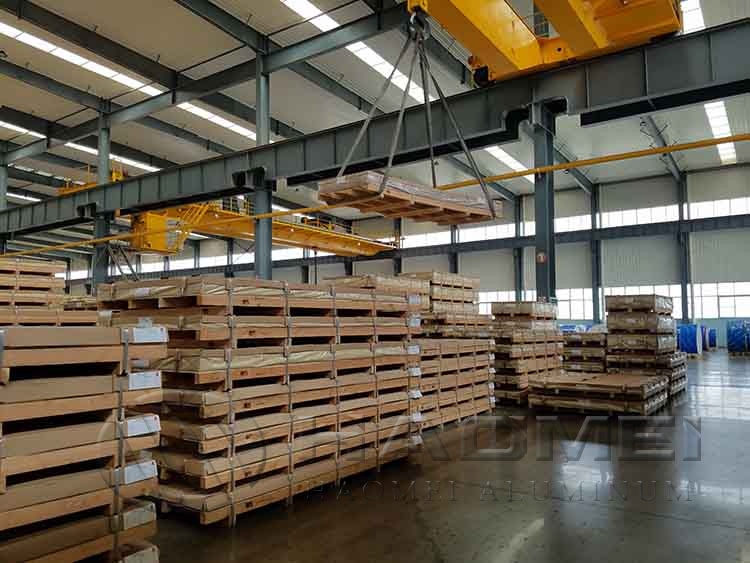
| Packaging | Export wooden pallet, paper interleave |
When these details are clear, it becomes much easier to judge whether 1100 Aluminum Sheet is the right fit and whether another pure aluminum grade would offer a better balance of processing, cost, and performance.