




3000 Series Aluminum
Sep 07 26
For formed aluminum components, cracking during bending, deep drawing, stamping, or roll forming is often a temper-selection problem rather than an alloy problem. The 3000 aluminum family is manganese-alloyed and widely specified where moderate strength, corrosion resistance, and practical formability are required.
The most important purchasing question is not simply whether the material is 3003, 3004, 3104, or 3105. It is whether the selected temper, thickness tolerance, grain direction, and lubrication condition match the actual forming operation.
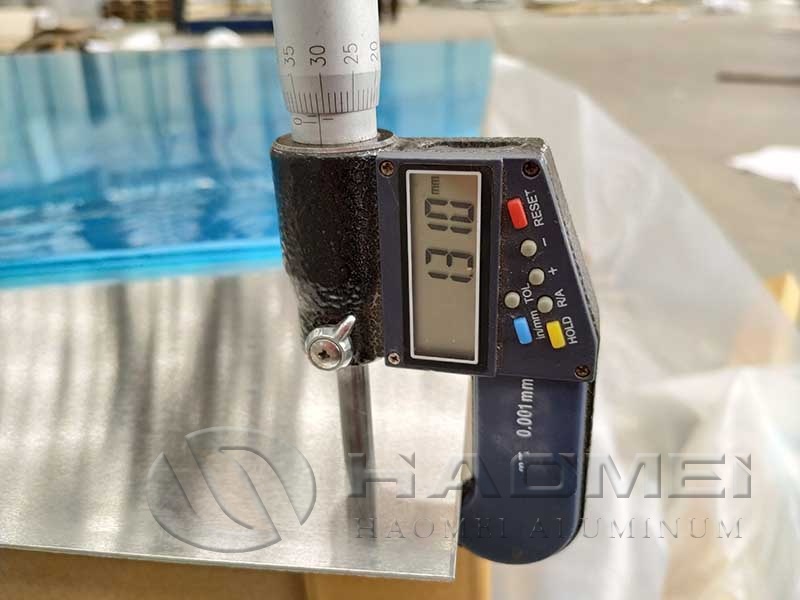
1. Compare 3000 Aluminum Grades Before Setting the Temper
The Aluminum Association alloy designation system identifies 3xxx alloys as aluminum-manganese wrought alloys. Magnesium is also added in several grades to increase strength. Chemical composition alone does not define final performance: temper and product dimensions have a major effect on forming results.
| Alloy | Principal specified additions by weight | Typical application direction | Forming consideration |
|---|---|---|---|
| 3003 | Mn 1.0-1.5%, Cu 0.05-0.20% | General fabrication, roofing, cooking equipment, heat-transfer parts | Strong general-purpose choice, especially in O or H14 temper |
| 3004 | Mn 1.0-1.5%, Mg 0.8-1.3% | Drawn containers, building products, formed panels | Higher strength than 3003, but less forming margin in harder tempers |
| 3104 | Mn 0.8-1.4%, Mg 0.8-1.3% | Beverage-can body stock and high-speed drawing | Select only when the process controls support demanding draw performance |
| 3105 | Mn 0.3-0.8%, Mg 0.2-0.8% | Painted building sheet, siding, gutters, roll-formed profiles | Frequently selected for painted and moderately formed products |
These ranges are principal alloying additions from Aluminum Association registered composition limits. They are not complete purchasing specifications. A mill test certificate must state the complete chemical analysis, temper, dimensions, and mechanical-property results for the supplied material.
For standard fabricated products, Alloy 3003 Aluminum Sheet is often appropriate when ductility and uncomplicated fabrication matter more than maximum strength. For demanding drawn applications, 3104 Aluminum Alloy is commonly evaluated because its magnesium content provides additional strength.
A current packaging topic is circularity compliance. Regulation (EU) 2025/40, the Packaging and Packaging Waste Regulation, entered into force on February 11, 2025, with general application beginning August 12, 2026. It increases attention on recyclable packaging design. However, this regulation does not qualify a specific aluminum alloy for food contact or a particular forming operation. Material approval still requires applicable product, food-contact, coating, and customer-process requirements.
2. Use Temper Selection to Control Cracking Risk
Temper describes the mechanical condition created by annealing and strain hardening. It is essential to specify temper in the purchase order because an identical alloy in O and H24 tempers can behave very differently on a press.
| Temper designation | Meaning under ANSI H35.1 conventions | Forming risk | Suitable process examples |
|---|---|---|---|
| O | Annealed | Lowest cracking risk, lower strength | Deep drawing, severe bending, spinning |
| H12 / H22 | Quarter-hard condition | Low to moderate risk | Light forming, shallow draw operations |
| H14 / H24 | Half-hard condition | Moderate risk | General fabrication, moderate bends, panels |
| H16 / H26 | Three-quarter-hard condition | Higher risk | Limited forming, stiffness-driven components |
| H18 | Full-hard condition | Highest risk | Flat or minimally formed applications |
The first digit in H tempers identifies strain hardening treatment. H1 indicates strain-hardened only, while H2 indicates strain-hardened and partially annealed. The final digit indicates the degree of hardening. Do not substitute H14 and H24 without process validation, even where nominal hardness appears similar.
Use this pre-order checklist to reduce cracking:
- Define the minimum inside bend radius and the bend orientation relative to rolling direction.
- State whether the operation is bending, deep drawing, stamping, spinning, or roll forming.
- Request tensile-property limits for the required thickness and temper, not only a generic alloy data table.
- Identify surface requirements, including mill finish, coating, oiling, or cleanliness limits.
- Run a production-representative forming trial when changing mill source, temper, gauge, or tooling.
A practical rule is to begin development in O temper for severe drawing. Increase temper only after the component has passed dimensional, strength, and appearance testing. This sequence protects forming margin while avoiding an unnecessarily soft final part.
3. Put Standards, Inspection, and Packaging on the Order
An order that says only "3003 aluminum" leaves critical variables open. Include the governing specification and measurable acceptance requirements. ASTM B209 covers aluminum and aluminum-alloy sheet and plate, while ASTM B479 covers annealed aluminum and aluminum-alloy foil for flexible barrier, food contact, and other applications. Confirm the current edition and product scope with the contract documents.
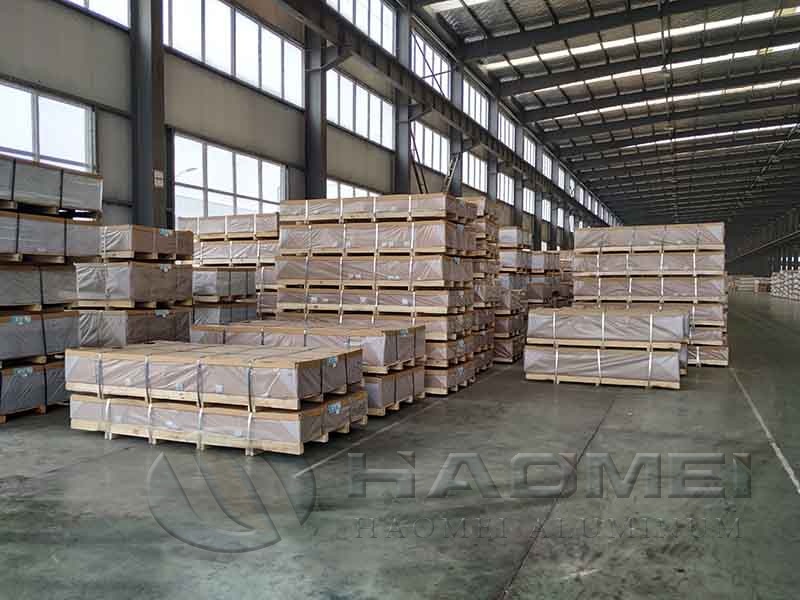
Use the following order-line format as a working model:
| Requirement | What to state | Why it prevents disputes |
|---|---|---|
| Alloy and temper | Example: 3003-H14 or 3004-O | Prevents unintended mechanical condition |
| Form and dimensions | Width, thickness, length or coil ID/OD, tolerance | Controls press fit, yield, and setup |
| Applicable standard | ASTM B209, ASTM B479, or customer specification | Establishes test and acceptance basis |
| Mechanical properties | Required tensile strength, yield strength where applicable, elongation | Connects material release to forming performance |
| Surface condition | Scratches, dents, oil level, coating compatibility, flatness | Protects appearance and downstream processing |
| Documentation | Mill test certificate, packing list, traceability identifier | Supports incoming inspection and lot traceability |
| Packaging | Moisture barrier, edge protection, pallet method, coil support | Reduces transit damage and corrosion exposure |
At receiving, verify alloy and temper against the mill test certificate, then measure thickness at a documented sampling frequency. For coils, inspect edge condition, telescoping, coil set, and transit damage before slitting or feeding. For circles and blanks, inspect burr direction and diameter consistency because both can affect draw quality.
Forming performance improves when alloy grade, temper, tooling radius, lubrication, and thickness tolerance are specified as one controlled system. For most fabrication programs, the correct temper decision made before production is the most effective control against cracking, scrap, and avoidable press interruptions.