




Aluminium Checker Plate Thickness for Walkways
May 13 26
In urban infrastructure construction, residential walkways, park landscaping, and commercial plaza pedestrian paving, aluminum checker sheets are gradually replacing traditional stone, iron plates, and plastic flooring, becoming a popular material for sidewalk paving due to their core advantages of being slip-resistant, wear-resistant, lightweight, corrosion-resistant, aesthetically pleasing, easy to clean, and having a long service life.
Unlike patterned aluminum sheets used in industrial equipment, ships, and workshop platforms, the requirements for aluminum sheet thickness, load-bearing capacity, and slip resistance in sidewalk applications are more aligned with pedestrian load characteristics. The choice of thickness directly determines paving costs, safety, and durability.
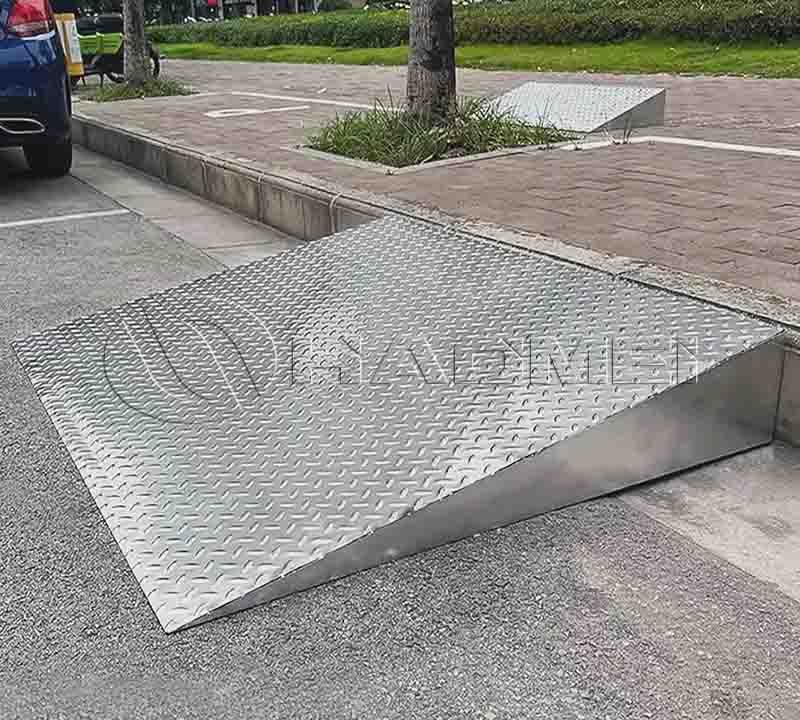
A full range of aluminum tread sheet thicknesses for sidewalk
Commonly used aluminum tread plate thicknesses include 1.5mm, 2.0mm, 2.5mm, 3.0mm, 4.0mm, and 5.0mm. Aluminum sheets thinner than 1.0mm lack rigidity and are easily deformed by foot traffic. Aluminum plates thicker than 6mm are too heavy, have high paving costs, and low cost-effectiveness, and are generally not used for ordinary sidewalk paving.
Different thicknesses correspond to different load-bearing levels and usage scenarios, precisely adapting to various scenarios such as residential walkways, municipal main roads, scenic walkways, and pedestrian overpasses.
Overall, 1.5mm is considered an entry-level thin type, 2mm and 3mm are the most widely circulated and applied golden thicknesses in the market, 2.5mm is a transitional specification, and 4-5mm is a heavy-duty thicker type. The division of labor is clear, and the adaptability is extremely strong.
Two Mainstream Thicknesses
Among all specifications of patterned aluminum sheets for sidewalks, 2mm and 3mm, with their balanced performance and cost-effectiveness, have become the first choice for municipal engineering, landscape renovation, and renovation of old walkways, accounting for more than 80% of the sidewalk paving market share. They are recognized as the universally popular thicknesses.
1. 2mm Aluminum Diamond Sheets
2mm aluminium checker plates are the standard specification for lightweight sidewalks and landscape walkways, and are also currently the most commonly used thickness for home courtyards, internal walkways in residential areas, small squares, and landscape boardwalks. This thickness of aluminum sheet results in lightweight construction, good overall toughness, and resistance to cracking. Installation is convenient, requiring no complex joist reinforcement, effectively reducing construction time and labor costs.
In terms of performance, 2mm patterned aluminum sheets fully meet the load requirements of ordinary pedestrians and non-motorized vehicles with occasional passage. The flat surface is resistant to deformation, and the combination of five-rib and willow-leaf patterns ensures a high level of slip resistance, effectively preventing pedestrians from slipping in rainy or wet conditions. Furthermore, the sheets are oxidation- and corrosion-resistant, resisting rust and fading even in outdoor use. Daily cleaning requires only simple rinsing, resulting in extremely low maintenance costs.
In terms of cost, 2mm aluminum sheets offer moderate material usage and excellent value, balancing practicality and economy. They are the optimal choice for small to medium-sized sidewalks and are currently the most widely available and readily available specification, with virtually no supply cycle pressure.
2. 3mm Aluminum Chequer Sheets
The aluminium chequer plate 3mm is the mainstream thickness used for municipal main roads, park walkways, commercial plazas, and pedestrian bridges, and are also the most commonly used standard specification in project acceptance.
Compared to 2mm sheet metal, 3mm aluminum sheet offers significantly improved rigidity, load-bearing capacity, and impact resistance. Its surface exhibits stronger resistance to deformation, and it won't dent or warp even after prolonged, high-frequency pedestrian traffic and light weight.
For complex outdoor environments, 3mm thick patterned aluminum sheet offers superior weather resistance, better resisting wind, rain, sun aging, and temperature-induced deformation. Its lifespan is longer than 2mm sheet metal, lasting 8-15 years without replacement. For high-traffic, densely populated public sidewalks, 3mm sheet metal effectively reduces the cost of future maintenance and replacement, offering better overall cost-effectiveness.
Furthermore, 3mm patterned aluminum sheet is highly adaptable, perfectly suited for flat ground paving, ramp anti-slip applications, step edging, and high-altitude sidewalk construction such as overpasses and connecting corridors. It is a preferred thickness for municipal engineering bidding and large-scale landscape projects.
Tips for Choosing the Thickness of Aluminum Sheets for Walkways
1. Small sidewalks, courtyards, and low-traffic areas: 2mm is preferred – economical, practical, and easy to install.
2. Municipal public sidewalks, plazas, overpasses, and high-traffic areas: 3mm is the first choice – durable, stable, and widely adaptable.
3. Heavy-duty, high-frequency wear public areas: 4-5mm thicker sheets are recommended to increase load-bearing capacity and service life.
4. For all sidewalk paving, it is recommended to use 5052 aluminum-magnesium alloy patterned sheets, which offer better corrosion resistance, toughness, and suitability for long-term outdoor use.
https://www.alsheetplate.com/a/aluminium-checker-plate-thickness-for-walkways.html